


Choosing a career in the beauty industry starts with finding the right training program. If you enjoy beauty services and want to turn your passion into a profession, you may be considering a Manicure Program or a Cosmetology Program. Both offer opportunities to develop professional skills, work with clients, and build a career in the beauty industry. However, they differ in their training requirements, curriculum, licensing scope, and career opportunities.
In Washington State, understanding these differences is especially important because manicurists and cosmetologists hold separate professional licenses with different scopes of practice.
So, which program should you choose? Whether you are interested in creating beautiful nail designs or developing a broader range of beauty skills, this guide will help you compare both options and find the path that best matches your career goals.
What Is the Difference Between a Manicure Program and a Cosmetology Program?
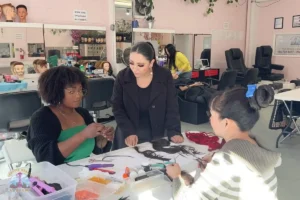
The main difference between a Manicure Program and a Cosmetology Program is the area of professional training.
A Manicure Program focuses specifically on nail care, nail enhancements, and professional manicuring and pedicuring services. Students learn techniques such as nail shaping, gel applications, acrylic nails, nail art, and sanitation practices.
A Cosmetology Program provides broader training, with a strong focus on hair services alongside foundational knowledge and practical skills in manicuring and esthetics-related services. Students learn professional hairstyling, hair cutting, coloring, chemical treatments, and other beauty techniques.
In Washington, these programs also lead to different licenses. A manicurist license allows professionals to perform a wider range of specialized nail services, including artificial nail applications. A cosmetologist license covers a broader range of hair services and certain limited skin and nail services.
Understanding these distinctions can help you choose a program that aligns with the services you want to provide professionally.
Manicure Program vs. Cosmetology Program: Side-by-Side Comparison
Before choosing a beauty school program, consider the training requirements, curriculum, and professional opportunities associated with each option.
| Comparison | Manicure Program | Cosmetology Program |
|---|---|---|
| Required school hours in Washington | 600 hours | 1,600 hours |
| Main focus | Nail care and nail enhancements | Hair and broader beauty fundamentals |
| Training | Manicures, pedicures, acrylic, gel, nail art | Hair cutting, coloring, styling, chemical services, basic skin and nail services |
| Licensing outcome | Manicurist license | Cosmetologist license |
| Artificial nail services | Included in license scope | Not included in cosmetology scope |
| Typical career settings | Nail salons, spas, independent nail businesses | Hair salons, beauty salons, cosmetology establishments |
| Best suited for | Students passionate about nail services | Students interested in professional hair services and broader beauty training |
Both programs require classroom instruction and hands-on practice. However, the number of training hours and the skills you develop are different.
How Long Does Each Program Take?
In Washington, the required school training is 600 hours for a Manicurist Program and 1,600 hours for a Cosmetology Program.
At Seattle Beauty Academy, the Manicure Program can be completed in as little as 2.5 months for full-time students. The Cosmetology Program generally takes 12–16 months for most full-time students.
Actual completion time depends on your attendance schedule and learning progress. Students who choose part-time schedules may need additional time.
If you want to enter the beauty industry through a shorter, specialized training path, manicure training may be a practical option. If you prefer more extensive training in hair services, cosmetology offers a broader educational experience.
What Can You Do With a Manicurist License in Washington?
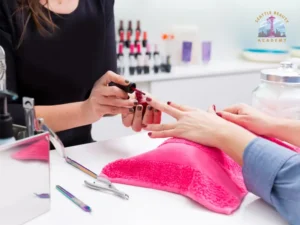
A manicurist license is designed for professionals who want to specialize in nail care and nail enhancement services.
During a Manicure Program, students develop technical skills and learn how to provide professional nail services while maintaining proper hygiene and client safety.
Common areas of training include:
1. Manicure and Pedicure Fundamentals
Students learn nail anatomy, nail shaping, cuticle care, hand and foot care, and proper techniques for performing professional manicures and pedicures.
2. Acrylic and Gel Nail Enhancements
Training includes artificial nail applications, acrylic techniques, gel nails, nail extensions, and other enhancement methods.
3. Nail Art and Creative Designs
Students explore nail polish applications, decorative techniques, rhinestones, and different nail art styles to create customized looks for clients.
4. Sanitation and Safety
Proper disinfection, workstation preparation, tool maintenance, and chemical safety are essential parts of professional nail training. Learn more about Nail Salon Sanitation Standards in Washington.
5. Client Communication and Salon Practices
Students develop communication skills, learn how to understand client preferences, and become familiar with professional salon procedures.
After meeting Washington’s licensing requirements, graduates can pursue opportunities in nail salons, spas, and other licensed establishments. Some may also explore independent business opportunities as their experience grows.
If you enjoy detailed creative work and want to specialize in nail services, a Manicure Program may be the right choice.
What Can You Do With a Cosmetologist License in Washington?
A cosmetologist license offers a broader scope of professional services, particularly in hair care and hairstyling.
Unlike a Manicure Program, which concentrates on nail techniques, a Cosmetology Program introduces students to multiple areas of beauty services. Hair training is a major part of the curriculum, supported by foundational education in other areas.
Here are some important areas of cosmetology training:
1. Hair Cutting and Styling
Students learn different haircutting techniques, hair sectioning, blow-drying, styling, and professional finishing methods for different hair types and textures.
2. Hair Coloring and Chemical Services
Training introduces students to hair coloring, bleaching, lightening, permanent waving, chemical relaxing, and other professional hair treatments.
3. Hair and Scalp Care
Students study hair structure, scalp conditions, hair analysis, and proper hair care practices to better understand clients’ needs.
4. Basic Nail and Skin-Related Services
Washington cosmetology training includes at least 100 hours of manicuring and pedicuring skills and at least 100 hours of esthetics services. These are part of the broader cosmetology curriculum.
However, cosmetology licensing does not cover every service provided by a licensed manicurist or esthetician.
5. Client Consultation and Professional Skills
Students learn how to communicate with clients, recommend appropriate services, maintain professional standards, and create positive salon experiences.
With a cosmetologist license, graduates can explore opportunities in hair salons and other licensed beauty establishments.
If you enjoy working with hair and want to develop a broader foundation in beauty services, cosmetology may be a suitable career path.
Understanding the Licensing Differences in Washington State

One of the most important factors when choosing between these programs is understanding what each license allows you to do.
Although cosmetologists receive training in basic manicuring and pedicuring, their license does not include every nail service.
According to Washington State law:
- Manicurists may clean, shape, polish, decorate, and care for the nails and cuticles of the hands and feet. Their licensed scope also includes the application and removal of artificial nails.
- Cosmetologists may perform basic manicuring and pedicuring services, including nail cleaning, shaping, polishing, decorating, and cuticle care. However, their scope excludes the application and removal of sculptured or artificial nails.
- Estheticians hold a separate license for professional skin care services, which has a different scope from the limited skin-related services included in cosmetology.
This distinction matters if you want to specialize in acrylic nails, gel extensions, or other artificial nail enhancements.
For the most accurate and updated licensing information, review the Washington State Department of Licensing’s Cosmetology licensing requirements and Washington State cosmetology laws.
Which Program Is Better for Beginners?
Both programs can be suitable for beginners. You do not necessarily need previous professional beauty experience to start learning.
The better option depends on your interests, preferred learning experience, and long-term career goals.
A Manicure Program may be a better fit if:
- You enjoy nail art, nail design, and detailed creative work.
- You want to specialize in manicures, pedicures, and artificial nail enhancements.
- You prefer a focused training program rather than studying multiple beauty disciplines.
- You want to pursue a career in the nail salon industry.
A Cosmetology Program may be a better fit if:
- You are interested in hair cutting, coloring, and styling.
- You want to develop professional hairstyling skills.
- You enjoy learning different beauty techniques.
- You want a broader foundation for working in the beauty industry.
Before enrolling, consider which services you genuinely enjoy performing. Choosing a program based on your interests can help you stay motivated throughout your training and build a career that fits your strengths.
Which Program Should You Choose?
There is no single best program for everyone. The right choice depends on the type of beauty professional you want to become.
If your goal is to become a nail technician and specialize in acrylic nails, gel applications, manicures, pedicures, and nail art, the Manicure Program is a focused pathway toward that profession.
If you are more interested in professional hairstyling, hair coloring, cutting, and chemical services, the Cosmetology Program provides more extensive training in those areas.
You should also consider your available time, preferred schedule, and educational investment. A shorter program may help you focus on one specific service area, while a longer program offers more extensive training in hair and related beauty fundamentals.
Take time to explore the curriculum of each program and understand the licensing requirements before making your decision.
Start Your Beauty Career at Seattle Beauty Academy
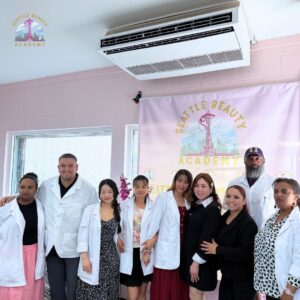
Choosing the right beauty school is an important step toward building a successful career. At Seattle Beauty Academy in Seattle, Washington, students can explore professional training opportunities in both manicure and cosmetology.
Our Manicure Program provides 600 hours of theory and practical training, covering nail care, acrylic and gel enhancements, nail art, sanitation, and Washington State licensing preparation. Students can choose from available full-time, part-time, and hybrid scheduling options.
Our Cosmetology Program provides 1,600 hours of professional training, focusing on hair cutting, coloring, styling, chemical services, and foundational skin and nail skills. Students develop their techniques through classroom instruction and hands-on practice.
Whether you choose to specialize in nail services or develop professional hairstyling skills, Seattle Beauty Academy offers a learning environment designed to help students build their knowledge, confidence, and practical abilities.
Explore our Manicure Training Program and Cosmetology Program to learn more about the curriculum and available schedules.
Ready to take the next step? Contact Seattle Beauty Academy to discuss your career goals and find the program that best fits your interests.
Frequently Asked Questions
1. Is a manicure license different from a cosmetology license in Washington?
Yes. Washington issues separate manicurist and cosmetologist licenses. A manicurist license focuses on nail services, including artificial nail applications and removal, while a cosmetologist license covers hair services and certain limited skin and nail services.
2. How many hours does a Manicure Program require in Washington?
A Washington-approved school Manicure Program requires 600 hours of training. Students study nail care, artificial nail applications, sanitation, safety, and other professional manicuring skills.
3. How many hours does a Cosmetology Program require in Washington?
A Washington-approved school Cosmetology Program requires 1,600 hours of training. The curriculum includes hair services, manicuring and pedicuring fundamentals, esthetics-related skills, and professional knowledge.
4. Can a cosmetologist perform acrylic nails in Washington?
No. Washington’s cosmetology license does not include the application or removal of sculptured or artificial nails. Individuals who want to provide these services need the appropriate manicurist license.
5. Which program takes less time to complete?
The Manicure Program requires fewer training hours than the Cosmetology Program. At Seattle Beauty Academy, full-time students can complete the 600-hour Manicure Program in as little as 2.5 months. Most full-time cosmetology students complete the 1,600-hour program in approximately 12–16 months.
6. Can I enroll in a beauty school program without previous experience?
Yes. Beginners can enroll in either program. Training starts with foundational knowledge and progresses toward more advanced techniques through theory and hands-on practice.
7. Which program offers more career opportunities?
The answer depends on your career interests. Cosmetology provides a broader range of hair-related services, while a manicurist license allows professionals to specialize in nail care and artificial nail enhancements. Both can lead to professional opportunities in the beauty industry.