


Choosing between working as an employee and renting a booth is an important decision for barbers building their careers in Washington State. Both arrangements offer opportunities to develop professionally, build a loyal clientele, and earn income through barbering. However, they differ significantly in financial responsibilities, independence, and day-to-day business operations.
Working as an employee generally provides more structure, while booth rental gives barbers greater control over their services and business decisions. The right choice depends on your experience, financial readiness, existing clientele, and long-term career goals.
If you’re considering a barbering career in Seattle or elsewhere in Washington, understanding these differences can help you make a more informed decision.
What Is the Difference Between an Employed Barber and a Booth Renter?

Before choosing a career path, it’s important to understand how each working arrangement operates.
1. Working as an Employed Barber
An employed barber works for a barbershop under an employment arrangement. Compensation may be based on an hourly wage, commission, salary, or a combination, depending on the employer’s pay structure.
The shop generally manages business operations such as rent, utilities, scheduling systems, and overall marketing. Some shops also provide equipment, supplies, training opportunities, and an established customer base.
Advantages of working as an employee:
- More predictable income: Hourly wages or guaranteed minimum compensation can provide greater financial stability.
- Established clientele: Walk-in customers and shop marketing may help barbers attract clients without building an entire customer base independently.
- Less administrative responsibility: The employer generally manages the shop’s operating expenses and business administration.
- Professional development: Working alongside experienced barbers can provide opportunities to improve haircutting techniques, customer service, and communication.
- Potential employee benefits: Depending on the employer and eligibility, benefits may include paid time off, health insurance, or retirement contributions.
Potential disadvantages:
- Less control over working hours and scheduling.
- Limited freedom to establish independent pricing.
- Compensation may depend on the employer’s commission structure.
- Business decisions and branding are generally controlled by the shop owner.
Employment can be a practical starting point for newly licensed barbers who want to gain experience and develop their technical skills in a professional environment.
2. Working as an Independent Booth Renter

Booth rental, sometimes called chair rental, allows a barber to rent a designated workstation inside an established barbershop.
Instead of receiving wages or commission from the shop owner, the barber operates independently and pays an agreed rental fee for using the space.
The barber typically manages their own appointments, client relationships, service pricing, and business expenses.
Advantages of booth rental:
- Greater independence: Barbers have more control over their schedules, services, and business decisions, subject to the rental agreement and applicable regulations.
- Control over pricing: Independent barbers can establish their own service prices.
- Direct client relationships: Barbers manage their own customer communication, booking, and retention strategies.
- Business development: Booth rental provides experience in marketing, financial management, and independent business operations.
- Potential for higher net earnings: Barbers with consistent bookings and controlled expenses may retain more income after covering their operating costs.
Potential disadvantages:
- Rental payments are generally due regardless of how many clients you serve.
- Income can fluctuate depending on bookings and customer retention.
- Barbers must manage their own business administration and financial records.
- Supplies, equipment, insurance, and marketing may become additional expenses.
- There may be additional licensing and tax responsibilities.
Booth rental is often more suitable for barbers who have developed a reliable clientele and are comfortable managing the business side of their profession.
Employee vs. Booth Rental for Barbers: Key Differences
Understanding the practical differences between employment and booth rental can help you determine which arrangement better fits your circumstances.
| Factor | Employed Barber | Booth Renter |
|---|---|---|
| Income structure | Hourly, salary, or commission | Revenue from personal services |
| Workspace expenses | Generally managed by employer | Pays agreed rental fee |
| Pricing | Usually determined by shop | Generally sets own prices |
| Schedule | Based on employer arrangements | Greater scheduling control |
| Client management | Often shared with shop | Primarily self-managed |
| Marketing | May be supported by shop | Usually self-managed |
| Supplies | Depends on employer agreement | Often self-funded |
| Business administration | Generally handled by employer | Managed independently |
| Financial risk | Generally lower | Generally higher |
| Business independence | Limited | Greater |
The distinction is not simply about how much money a barber earns. It also involves how much responsibility they want to take on.
An employee may earn a smaller percentage of each service but benefit from a more established business structure. A booth renter may retain more service revenue but must account for rent, supplies, insurance, marketing, and other operating expenses.
How Much Does It Cost to Rent a Barber Booth in Washington?

The cost of renting a barber booth in Washington depends on the city, shop location, rental agreement, and amenities included. Independent barbers typically pay a fixed weekly or monthly fee to use a workstation inside an established barbershop.
Based on publicly advertised rental listings reviewed in November 2026, a practical budgeting estimate for a barber booth in Washington is approximately $175–$250 per week, or around $758–$1,083 per month. This is a general planning range rather than an official statewide average.
Some locations offer less expensive arrangements, while premium stations in desirable neighborhoods may cost considerably more.
1. Average Barber Booth Rental Prices by City in Washington
Rental costs can differ considerably between Washington cities. Here is a comparison of publicly advertised barber and salon chair rental prices:
| City | Advertised Weekly Price | Approximate Monthly Cost |
|---|---|---|
| Seattle | $162–$300 | $702–$1,300 |
| Tacoma | $115–$185 | $498–$802 |
| Bellevue | Around $200 | Around $867 |
| Everett | Around $185 | Around $802 |
| Spokane / Spokane Valley | $92–$162 | $399–$702 |
| Vancouver | $175–$400 | $758–$1,733 |
Note: These figures reflect publicly advertised rental listings, not verified transaction prices. Some listings are for general salon stations rather than barber-exclusive booths. Cities with limited listings should be treated as indicative examples, not representative market averages. Monthly equivalents are calculated using 52 weeks per year divided by 12 months.
Seattle generally has higher advertised rental costs than some other Washington markets. For example, publicly listed barber-specific rentals in Seattle average approximately $215 per week. Meanwhile, Tacoma has advertised salon chair rentals starting around $115 per week, and a local barbershop has advertised a booth at $150 per week.
Before choosing a location, compare the actual rental agreement rather than looking at price alone. A more expensive booth may offer better facilities, a convenient location, and included utilities that reduce additional operating expenses.
2. What Is Usually Included in a Barber Booth Rental?
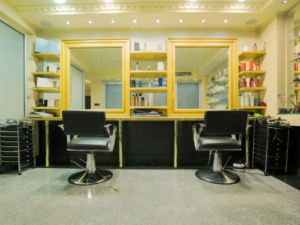
The services and amenities included in a rental agreement vary between barbershops. Some provide a fully equipped workstation, while others expect independent barbers to bring their own tools and supplies.
Before signing an agreement, ask whether the rental fee includes:
- Barber chair, mirror, and workstation.
- Electricity, water, and Wi-Fi.
- Shared waiting areas and restroom facilities.
- Towels, capes, and cleaning supplies.
- Storage space for barber tools and equipment.
- Access to the shop outside regular business hours.
Clarifying these details helps you calculate your actual operating expenses and avoid unexpected costs.
3. How to Calculate Your Break-Even Point
Before renting a booth, estimate how much revenue you need to cover your operating expenses.
A simple calculation is:
Monthly break-even revenue = Total monthly business expenses
For example, if your monthly expenses include booth rental, supplies, insurance, marketing, and payment processing, your service revenue must cover those costs before you begin generating business profit.
You should also consider your desired personal income and applicable taxes.
A useful budgeting formula is:
Required monthly revenue = Operating expenses + Desired pre-tax business income
This calculation helps you evaluate whether your current client base can realistically support an independent booth rental arrangement.
Remember that total service revenue is not the same as take-home income. A barber should account for business expenses and tax obligations before assessing profitability.
Washington State Barber Licensing and Booth Rental Requirements

Before renting a barber booth in Washington, it’s important to understand the licensing requirements that apply to professional services and business operations.
1. Maintain an Active Barber License
Whether you work as an employee or independently, you must hold the appropriate Washington barber license to perform services that require one.
Your employment arrangement does not replace your individual professional licensing requirements.
2. Understand Salon/Shop Licensing Requirements
Washington has separate licensing requirements for businesses and locations where barbering services are provided.
Under Washington Administrative Code WAC 308-20-520, an operator leasing space must obtain both a valid operator license and a salon/shop license for that specific location.
Washington Department of Licensing guidance also identifies individuals leasing space as falling within salon/shop licensing requirements.
Before entering a booth rental agreement, confirm with the Washington State Department of Licensing which licenses are required for your specific arrangement.
3. Understand Business Licensing and Tax Responsibilities
Barbers operating independently may have additional business registration and tax responsibilities.
The Washington Department of Revenue explains that individuals operating a beauty business rather than working as employees must apply for a business license.
Independent booth renters should also understand their applicable business and occupation (B&O) tax reporting responsibilities and maintain accurate financial records.
4. Understand Independent Contractor Classification
Washington law recognizes qualifying booth renters as independent contractors for purposes of the state’s Business and Occupation Tax chapter under RCW 82.04.360.
The statutory definition describes a booth renter as someone who performs licensed services and pays a fee to use salon or shop facilities without receiving compensation from the shop owner for those services.
However, this tax-law definition should not be interpreted as automatically determining employment status under every other state or federal law.
Barbers and shop owners should make sure their actual working arrangement is consistent with the applicable legal requirements.
Official Washington resources:
- Washington Department of Licensing: Salon/Shop Licensing Requirements
- Washington Administrative Code: WAC 308-20-520
- Washington Department of Revenue: Specific Licensing Requirements
- Washington Revised Code: RCW 82.04.360
Licensing and tax requirements may depend on the specific business arrangement. Consult the relevant Washington agencies or a qualified professional when necessary.
Which Is Better for New Barbers in Washington?

There is no single arrangement that works for every barber. Your experience, financial situation, and professional goals should influence your decision.
1. For Newly Licensed Barbers
Starting as an employee can provide valuable experience for barbers entering the profession.
Working in an established shop allows new professionals to practice their technical skills, improve service efficiency, observe experienced barbers, and develop confidence when working with clients.
It can also provide opportunities to understand customer expectations and professional shop operations.
2. For Barbers With an Established Clientele
 Booth rental may be worth considering once you have developed a consistent customer base.
Having returning clients can make it easier to forecast income and manage fixed operating expenses.
However, a loyal clientele alone does not guarantee profitability. You should also evaluate rental costs, booking consistency, and the time required to manage your independent business.
3. For Barbers Interested in Business Ownership
Booth rental can provide practical experience in entrepreneurship.
Independent barbers learn to manage pricing, expenses, appointment scheduling, customer retention, and marketing.
These responsibilities can help prepare professionals who eventually want to operate their own barbershop.
How to Prepare for a Successful Barbering Career
Whether you choose employment or booth rental, professional skills remain the foundation of a successful barbering career.
Consider developing these essential competencies:
- Haircutting techniques: Build proficiency in fades, tapers, clipper work, scissor techniques, and different haircut styles.
- Shaving and grooming techniques: Understand professional shaving procedures, beard shaping, and grooming services.
- Sanitation and safety: Follow appropriate sanitation, disinfection, and infection-control practices.
- Client consultation: Learn how to understand customer preferences, recommend suitable styles, and communicate effectively.
- Time management: Develop efficient service routines while maintaining quality.
- Business awareness: Understand pricing, customer retention, budgeting, and marketing.
Technical ability and professional communication are equally important. A barber who consistently delivers quality services and creates positive client experiences has a stronger foundation for long-term career development.
At Seattle Beauty Academy, students can develop foundational barbering knowledge and practical skills through hands-on training designed to prepare them for professional opportunities.
Explore our Barber Program to learn more about barbering education and training opportunities in Washington.

Frequently Asked Questions
Can a barber rent a booth in Washington without a business license?
Independent booth renters may need a Washington business license in addition to applicable professional and salon/shop licenses. Requirements depend on the business arrangement. Check with the Washington Department of Revenue and Department of Licensing before beginning operations.
Do booth renters need their own barber license?
Yes. Barbers performing services that require a professional license must maintain the appropriate Washington barber license, regardless of whether they work as employees or independent booth renters.
Is booth rental better than working on commission?
It depends on your clientele, expenses, and financial goals. Commission-based employment may offer more predictable income and fewer business responsibilities. Booth rental can offer greater independence but requires the barber to manage rental costs and other operating expenses.
Can a newly licensed barber rent a booth?
A newly licensed barber may consider booth rental if they meet the applicable licensing requirements and can manage the financial and business responsibilities. However, gaining experience in an established barbershop first may be a more practical option for some new professionals.
Who pays for supplies in a barber booth rental arrangement?
This depends on the rental agreement. Some shops provide certain supplies or equipment, while others expect independent barbers to purchase and maintain their own tools and materials. Always clarify these responsibilities before signing an agreement.
Final Thoughts
Choosing between employment and booth rental is an important step in building a sustainable barbering career.
Employment can offer structure, professional guidance, and a more predictable income arrangement. Booth rental can provide greater independence and opportunities to develop business management skills.
For newly licensed barbers, gaining experience in an established barbershop may be a useful first step. As your technical skills, clientele, and financial confidence grow, independent booth rental may become a suitable next stage.
Regardless of the path you choose, strong barbering skills, professionalism, and lasting client relationships are essential foundations for long-term success.