


There’s a reason people leave the nail salon walking a little taller after a good pedicure. It’s not just about polish — a professional pedicure at salon in Washington follows a precise routine that improves foot health, prevents infection, and delivers that smooth, salon-fresh finish you can’t easily get at home.
Whether you’re a client wondering what happens behind the pedicure station or an aspiring nail technician learning the craft, here’s a breakdown of the seven steps licensed professionals follow every time.
Why a Professional Pedicure Is Different
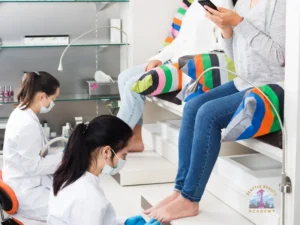
A DIY foot soak at home might feel relaxing, but it rarely matches the technique, hygiene standards, and tools used by a trained nail technician.
In Washington State, licensed nail techs are required to follow strict sanitation protocols set by the Department of Licensing, which is one of the biggest reasons people choose a salon pedicure treatment over an at-home version.
From proper foot soaking techniques to safe callus removal, every step is designed to protect your skin and nails while giving you a polished result.
1. Client Consultation and Sanitation
A professional pedicure begins before the technician touches the client’s feet. A brief consultation and careful inspection help the technician understand the client’s needs, determine whether the requested service is appropriate, and prepare the workstation properly.
- Start With a Client Consultation
The technician should ask about the client’s preferences, concerns, previous nail services, and any relevant sensitivities or conditions that could affect the service. The feet and toenails should also be visually inspected for noticeable changes, irritation, injuries, or other abnormalities.
If a condition appears to fall outside the nail technician’s professional scope, the service may need to be modified, postponed, or referred to an appropriate healthcare professional. Nail technicians should not diagnose or medically treat nail or foot conditions. For more information, see our guide to nail conditions every nail technician should know.
- Prepare a Clean and Sanitary Workstation
Proper sanitation is an essential part of every professional pedicure. Before beginning the service, the technician should prepare a clean workstation and ensure that reusable implements have been properly cleaned and disinfected according to applicable salon requirements.
The technician should also:
- Prepare clean and properly disinfected implements.
- Use appropriate single-use items when required.
- Prepare the pedicure station and surrounding surfaces before the client arrives.
- Follow the manufacturer’s instructions and applicable requirements for cleaning and disinfecting foot-spa equipment.
- Maintain clean towels, linens, and other service materials.
- Wash or sanitize hands appropriately before and during the service as required by professional practice.
Starting with a thorough consultation and properly prepared workstation establishes the foundation for a safe, organized, and professional pedicure service.
Step 2: Removing Old Polish
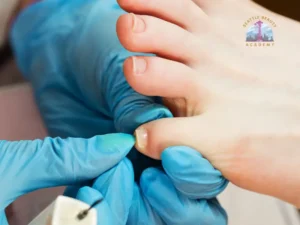
Old polish is removed completely using a gentle, non-drying remover. This gives the technician a clear view of the natural nail bed, so they can spot any ridges, discoloration, or damage before moving forward. It also ensures the new polish will apply smoothly and last longer without lifting.
Step 3: Foot Soak
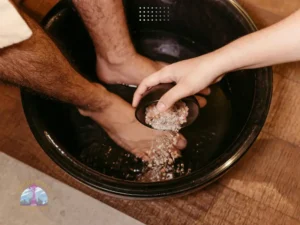
Next comes the part most people associate with a pedicure — the warm foot soak. This step softens the skin and cuticles, making the rest of the service easier and more comfortable. Many salons add Epsom salts or a light aromatic soak to help with circulation and relaxation.
Proper foot-soaking practices in Washington salons use is timed carefully; soaking too long can actually dry out the skin, so technicians usually keep it to about five to ten minutes.
Step 4: Nail Shaping and Cuticle Care
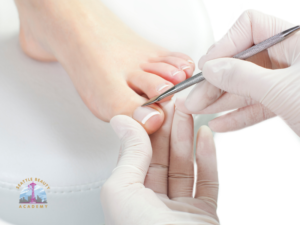
Once nails are clean and softened, the technician trims and shapes each nail, typically straight across with slightly rounded edges to help prevent ingrown toenails.
Cuticles are gently pushed back and trimmed only where necessary — over-trimming cuticles is a common mistake in home pedicures, and it’s one reason a licensed nail tech tends to look more polished and last longer without irritation.
Step 5: Callus and Dead Skin Removal
This is where a professional pedicure really sets itself apart. Using a foot file, pumice stone, or electric callus remover, the technician smooths away rough, dead skin from the heels and balls of the feet.
In Washington, licensed nail techs are trained to do this safely, avoiding tools that could nick the skin or spread bacteria — something that’s become a bigger safety concern with certain at-home devices and some unlicensed operators. Read more to know How to Clean Nails the Professional Way
Step 6: Massage and Moisturizing
After exfoliation and callus care, the technician applies an appropriate moisturizer or massage product and performs the massage according to the salon’s service protocol. This step helps condition the skin and provides the relaxing finishing experience many clients associate with a professional pedicure.
Step 7: Polish Application
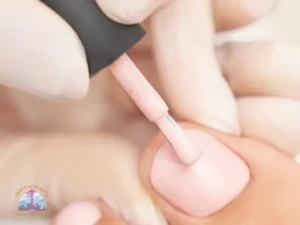
When polish is part of the service, the technician applies the appropriate base coat, color coats, and top coat according to the product system and desired result.
What This Means for Aspiring Nail Technicians
If you’ve ever watched a pedicure and thought, “I could see myself doing this as a career,” Washington’s beauty industry has plenty of room for skilled, licensed nail technicians.
The Nail Tech Program at Seattle Beauty Academy teaches all seven of these steps — and much more — through hands-on training with live clients, so students graduate ready to sit for the Washington State licensure exam with real confidence, not just classroom theory.
A Graduate’s Story
That confidence shows up in real reviews from real graduates. Phi Co Hoang Nguyen, a Seattle Beauty Academy graduate, shared a five-star review after passing the Washington State licensing exam on the first try for both the practical and written sections:
“I just got my LICENSE!! Even though I’m kind of a slow person, I still achieved on my first try for both practical and written. Thank you Seattle Beauty Academy that give me education and reference me to a job. Thank you again best school ever!”
Stories like this reflect what Seattle Beauty Academy aims to deliver for every student: small class sizes, hands-on practice, and an educational experience that translates directly into real-world licensure and job placement — no matter where a student is starting from.

Ready to Learn the Craft?
Whether you’re booking your next pedicure appointment or considering a career change into the beauty industry, understanding these seven steps highlights just how much skill and training go into a truly professional service.
If you’re in the Seattle area and curious about turning this into a career, Seattle Beauty Academy’s Nail Technology program is a great place to start.
FAQs
What are the steps of a professional pedicure?
A professional pedicure typically includes consultation and sanitation, polish removal, soaking or cleansing, nail shaping and cuticle care, callus care, moisturizing/massage, and finishing with polish or another nail service.
How long does a professional pedicure take?
The duration depends on the service, the client’s needs, and the salon’s service protocol. A basic pedicure may take less time than a more extensive treatment involving additional callus care, exfoliation, or specialized products.
What should a nail technician check before performing a pedicure?
The technician should assess the condition of the client’s feet and toenails, ask about relevant concerns, and identify circumstances that may require modification, postponement, or referral.
Why is sanitation important during a pedicure?
Pedicure services involve close contact with the feet, skin, nails, implements, and foot-spa equipment. Proper cleaning, disinfection, and handling of single-use items are essential parts of professional salon practice.
Can nail technicians treat foot or nail infections?
Nail technicians should not diagnose or medically treat infections. If a client presents with a condition that appears outside the technician’s scope of practice, the appropriate response may be to postpone the service and recommend evaluation by a qualified healthcare professional.