


Understanding hair texture is one of the first steps toward providing effective, personalized hair services. Before choosing a haircut, styling technique, chemical service, or product, a professional hair stylist needs to understand how the client’s hair behaves.
The term type of hair texture is sometimes confused with hair type. While these concepts are related, they are not exactly the same. Hair type often describes the natural pattern of the hair—such as straight, wavy, curly, or coily—while texture generally refers to the thickness or diameter of individual hair strands.
For a professional stylist, identifying these characteristics is more than simply looking at the hair. A proper hair analysis considers several factors, including strand thickness, curl pattern, density, porosity, elasticity, and the hair’s overall condition.
These skills are important foundations for anyone preparing for a career in professional hair services. At Seattle Beauty Academy, hair analysis and understanding different hair characteristics are incorporated into the training students receive through the Cosmetology Program and Hair Design Program.
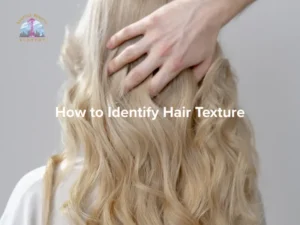
What Does Hair Texture Mean?
Hair texture refers primarily to the diameter and feel of an individual strand of hair. Hair is commonly described as fine, medium, or coarse.
Fine Hair
Fine hair has a relatively small strand diameter. Individual strands can feel delicate or difficult to detect when rolled between the fingertips. Fine hair may also appear less voluminous, although strand thickness and hair density are two different characteristics.
Because fine strands can be more susceptible to damage, stylists need to consider the client’s existing hair condition before recommending chemical services, heat styling, or other treatments.
Fine hair can also become weighed down by heavy products. A stylist may therefore consider lighter formulations and techniques that preserve movement and volume.
Medium Hair
Medium hair falls between fine and coarse strands. It is often easier to style and may tolerate a broader range of styling techniques, depending on its condition.
However, “medium” does not automatically mean healthy or strong. A stylist should still evaluate factors such as chemical processing, heat damage, moisture levels, and elasticity before deciding how to work with the hair.
Coarse Hair
Coarse hair has a larger strand diameter and often feels more substantial between the fingers. It may appear fuller and can sometimes require additional moisture or conditioning, particularly when the hair is dry or chemically treated.
Coarse hair may also have a strong natural pattern, which can influence cutting, styling, and product selection.
The important point for stylists is that strand thickness is only one part of a complete hair analysis.
Hair Texture vs. Hair Pattern
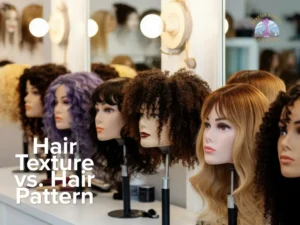
One of the most important distinctions for new stylists to understand is the difference between texture and natural hair pattern.
The natural pattern describes how the hair grows and forms, commonly categorized as:
- Straight
- Wavy
- Curly
- Coily
These categories describe the shape or pattern of the hair rather than the diameter of the strand.
For example, a client can have fine curly hair, medium curly hair, or coarse curly hair. Similarly, straight hair can be fine, medium, or coarse.
This is why simply saying that someone has “curly hair” does not provide enough information for a professional hair consultation.
A stylist needs to look at multiple characteristics before deciding how to approach the service.
Instructor’s Advice — Ms. Yazmin – Seattle Beauty Academy’s licensed instructor:
“Remember that curly doesn’t automatically mean coarse, and straight doesn’t automatically mean fine. Always separate the hair’s pattern from its actual strand texture before deciding how you will work with it.”
How Can a Hair Stylist Identify Hair Texture?
Professional hair analysis begins with observation and consultation. A stylist should not rely on one characteristic alone.
Here are several practical factors professionals can evaluate.
1. Examine the Individual Strand
One of the simplest ways to evaluate texture is to look at and feel an individual strand.
A stylist can gently roll a clean, dry strand between the fingertips to get an impression of its diameter. Fine strands may be difficult to feel, while coarse strands are generally more noticeable.
Visual inspection under appropriate lighting can also help the stylist compare the strand’s thickness and condition.
This evaluation is particularly useful because overall hair volume can be misleading. A client may have a lot of fine hair or relatively little coarse hair.
2. Observe the Natural Hair Pattern
The stylist should examine the hair in its natural state whenever possible.
Straight hair generally falls without a pronounced curve. Wavy hair creates visible bends or an “S” pattern. Curly hair forms more defined loops or curls, while coily hair creates tighter patterns.
Heat styling, brushing, chemical services, and temporary styling products can alter the appearance of the natural pattern. For that reason, a stylist should consider the client’s normal hair behavior rather than relying entirely on a recently styled appearance.
Instructor’s Advice — Ms. Yazmin – Seattle Beauty Academy’s licensed instructor:
“A professional consultation is like putting together a puzzle. Look at the strand, observe the natural pattern, check the density, and ask the client about their previous services. One observation rarely tells you the complete story.”
3. Evaluate Hair Density
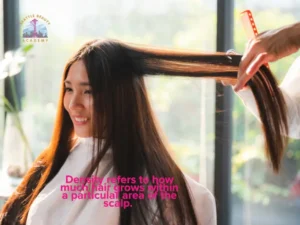
Density refers to how much hair grows within a particular area of the scalp. It is different from strand thickness.
A client can have fine hair with high density or coarse hair with low density.
For a stylist, understanding density can influence haircutting decisions. For example, the same haircut may need to be adapted differently for someone with very dense hair compared with someone whose hair is less dense.
During a consultation, the stylist can visually examine the scalp and overall distribution of the hair to develop a better understanding of density.
4. Consider Porosity
Hair porosity describes the hair’s ability to absorb and retain moisture. It can be influenced by the hair’s structure as well as environmental exposure, chemical processing, and heat.
Porosity is particularly relevant when selecting products and planning chemical or conditioning services.
A stylist may observe how the hair responds to water and products, while also considering the client’s history of coloring, lightening, relaxing, perming, or frequent heat styling.
Porosity should therefore be considered alongside texture rather than treated as another name for texture.
Instructor’s Advice — Ms. Mindy:
“Always ask about the client’s chemical and color history. What you see today may be the result of previous services, not simply the client’s natural hair characteristics.”
5. Check Elasticity
Hair elasticity describes the hair’s ability to stretch and return toward its original state without breaking.
This can provide useful information about the hair’s condition. Hair that has experienced significant chemical or heat damage may have reduced elasticity.
For a professional stylist, this matters when deciding whether the hair is suitable for certain services and how aggressively it should be manipulated.
6. Ask About the Client’s Hair History
A hair analysis should not depend entirely on physical observation.
A good consultation includes questions about the client’s routine and history. A stylist may ask:
- How often do you use heat tools?
- Have you colored or lightened your hair?
- Have you had chemical straightening or perming services?
- What products do you currently use?
- How does your hair normally behave after washing?
- What concerns do you have about your hair?
- How much time do you spend styling it?
These questions help distinguish the client’s natural characteristics from changes caused by previous services or styling habits.
Instructor’s Advice — Ms. Mindy:
“Never underestimate the consultation. Your client may tell you something about their daily routine or previous treatments that you can’t determine just by looking at their hair.”
Why Identifying Hair Texture Matters
Knowing the type of hair texture helps a stylist make more informed decisions.
For example, the technique used to create volume in fine straight hair may not be appropriate for dense, coarse, curly hair. Similarly, a haircut designed for naturally wavy hair may need to be modified when working with tightly coiled hair.
Texture can affect:
- Cutting techniques
- Sectioning
- Styling methods
- Product selection
- Heat-styling approaches
- Chemical-service decisions
- Finishing techniques
- Maintenance recommendations
This is why hair analysis should happen before, rather than after, making major service decisions.
Instructor’s Advice — Ms. Yazmin:
“There is no single technique that works exactly the same way on every head of hair. Once you understand the hair you’re working with, you can adjust your technique instead of trying to force the hair to behave a certain way.”

Hair Texture Is Not the Same as Hair Condition
Another common mistake is assuming that texture tells a stylist whether hair is healthy.
It does not.
Fine hair can be healthy, while coarse hair can be severely damaged. Curly hair can be healthy, while straight hair can be chemically compromised.
Hair condition is influenced by many factors, including chemical processing, mechanical stress, heat exposure, environmental factors, and daily maintenance.
A professional stylist therefore evaluates both the natural characteristics of the hair and its current condition.
This distinction is especially important when determining whether a client is an appropriate candidate for a particular chemical or heat-based service.
Why Hair Analysis Is an Important Skill for Future Stylists
Learning how to distinguish hair characteristics is not simply about memorizing categories. Students need to learn how to observe hair, conduct consultations, understand how different characteristics interact, and adapt techniques to individual clients.
This is one reason hair analysis is an important component of professional beauty education.
Students in Seattle Beauty Academy’s Cosmetology Program can build foundational knowledge of hair characteristics while developing broader skills required for professional cosmetology services. Students pursuing focused training through the Hair Design Program can also develop their understanding of hair analysis as it relates to cutting, styling, and client services.
The goal is not to place every client into a single category. Instead, future stylists learn to look at the whole picture.
Instructor’s Advice — Ms. Yazmin:
“Hair analysis becomes more natural with practice. The more different textures, patterns, densities, and conditions you work with, the more confident you’ll become in adapting your technique to each client.”
Putting It All Together: A Professional Approach
When determining a client’s hair characteristics, a stylist can follow a simple sequence:
Observe → Analyze → Consult → Plan → Customize
First, observe the hair in its natural or minimally manipulated state. Look at the strand, pattern, density, and overall condition.
Next, analyze additional characteristics such as porosity and elasticity. Then, discuss the client’s routine, previous services, styling preferences, and goals.
Only after gathering this information should the stylist develop a service plan.
This approach allows the stylist to move beyond a basic label such as “curly” or “fine” and develop a more complete understanding of the client’s hair.

The Bottom Line
Understanding the type of hair texture is a fundamental skill for professional hair stylists. Fine, medium, and coarse strands can behave differently, but texture is only one part of a complete hair analysis. Natural pattern, density, porosity, elasticity, hair condition, and the client’s styling history all contribute to how a stylist should approach a service.
For aspiring beauty professionals, learning to identify these characteristics provides a foundation for making better technical decisions and creating more personalized services. With proper training, students can learn not only to recognize different hair characteristics but also to understand how those characteristics influence cutting, styling, and other professional services.
At Seattle Beauty Academy, these principles can be developed through hands-on professional training in both the Cosmetology Program and Hair Design Program, helping students build the observation and technical skills needed to work with a wide range of clients and hair types.