


Hair cutting is one of the most important skills in professional hairstyling. A great haircut is not simply about taking length off the hair—it requires an understanding of shape, texture, elevation, angles, weight distribution, and finishing techniques.
Whether you are interested in creating classic cuts or modern layered styles, learning different hair cutting techniques gives you the flexibility to work with different hair types, face shapes, lengths, and client preferences.
In this guide, we’ll explore the most common professional hair cutting techniques, how they work, and when hairstylists use them.
What Are Hair Cutting Techniques?
Hair cutting techniques are the specific methods hairstylists use to remove, shape, texturize, or control hair. Each technique creates a different effect on the finished haircut.
The right technique depends on several factors, including:
- Hair length
- Hair density
- Hair texture
- Curl pattern
- Desired haircut shape
- Client’s styling routine
- Face shape and personal preferences
- Amount of movement or volume desired
Professional hairstylists often combine several cutting techniques in one haircut. For example, a stylist may use a blunt technique to establish the foundation, elevation to create layers, and point cutting to soften the ends.
Understanding how these techniques work is an essential part of professional hair design.
1. Blunt Cutting
Blunt cutting is one of the most fundamental haircutting techniques. The hair is cut straight across to create a clean, defined line.
This technique is commonly used for:
- Blunt bobs
- One-length cuts
- Straight, polished hairstyles
- Strong perimeter lines
- Creating the appearance of fuller ends
Because blunt cutting leaves a strong perimeter, it can make fine hair appear denser and more substantial.
For clients who want a sleek and structured haircut, a blunt line can provide a polished finish.
2. Point Cutting
Point cutting is a texturizing technique in which the scissors are positioned vertically or at an angle into the ends of the hair rather than cutting straight across.
Instead of creating a hard line, point cutting helps produce:
- Softer ends
- Natural movement
- Less visible cutting lines
- More texture
- A more blended appearance
Point cutting is particularly useful when a stylist wants to soften a haircut without significantly reducing its overall length.
It can also help create a more natural transition between different sections of a haircut.
3. Slide Cutting
Slide cutting involves moving the scissors along the hair rather than making a single straight cut across the section.
This technique can remove some weight while maintaining length and can create a softer, more fluid shape.
Stylists may use slide cutting to:
- Reduce bulk
- Create movement
- Blend sections
- Soften heavy ends
- Add a more graduated appearance
Because slide cutting changes the density of the hair without necessarily removing large amounts of length, it can be useful for creating flowing hairstyles.
4. Layering
Layering is one of the most versatile approaches to haircutting. Instead of leaving all the hair at one length, the stylist creates different lengths throughout the haircut.
Layers can help create:
- Movement
- Volume
- Dimension
- Shape
- Reduced bulk
- Better styling versatility
There are many types of hair layers, including long layers, short layers, face-framing layers, and blended layers.
The amount of layering should be customized according to the client’s hair density and texture. For example, excessive layering can remove too much weight from already fine hair, while strategic layering can help manage thick or heavy hair.
5. Graduation
Graduation creates a gradual change in length from one section of the haircut to another. The hair is typically elevated at a lower angle, allowing weight to build within the shape.
Graduated cuts are often used for:
- Bobs
- Short hairstyles
- Structured shapes
- Creating volume at specific areas
- Building weight around the perimeter
Graduation is especially important when creating precision hairstyles where the distribution of weight needs to be carefully controlled.
6. One-Length Cutting
A one-length haircut is created by cutting the hair to a consistent length, producing a strong and uniform perimeter.
This technique is often associated with classic styles such as:
- One-length bobs
- Blunt cuts
- Straight-across cuts
- Certain men’s and women’s foundational styles
One-length cutting can be especially effective for straight or fine hair because the solid perimeter can create the appearance of greater density.
7. Overdirection
Overdirection refers to moving a section of hair away from its natural fall or cutting position before making the cut.
This technique can be used to control where weight and length remain in the haircut.
For example, overdirecting hair toward a particular point can preserve length in another area and help create a specific shape.
Overdirection is an important concept in advanced haircutting because small changes in section positioning can significantly affect the final result.
8. Elevation
Elevation describes how far the hair is lifted away from the head while it is being cut.
Different elevation levels can create different results:
- Low elevation: retains more weight
- Medium elevation: creates moderate layering
- High elevation: creates lighter, more layered shapes
Understanding elevation allows hairstylists to control the relationship between length, layers, and weight.
It is one of the foundational technical concepts behind professional haircutting and hair design.
9. Razor Cutting
Razor cutting uses a razor instead of traditional haircutting scissors to remove length or create texture.
Depending on the technique, razor cutting can produce softer, more feathered, and more fluid ends.
It can be useful for hairstyles that require:
- Movement
- Soft texture
- Feathered ends
- A less structured appearance
- Lightweight shapes
However, razor cutting is not automatically appropriate for every hair type. Hair texture, density, condition, and the desired result should all be considered before selecting this method.
10. Texturizing
Texturizing is the process of selectively removing or redistributing weight to change how the hair moves and sits.
Stylists can use different tools and methods, including:
- Texturizing shears
- Point cutting
- Razor techniques
- Slide cutting
- Notching techniques
Texturizing is not necessarily about making the hair shorter. Instead, it is often about changing the weight, movement, and feel of the haircut.
For thick hair, controlled texturizing can help reduce unwanted bulk. For other hair types, however, too much texturizing can make the ends look thin or uneven.
11. Scissor-Over-Comb
Scissor-over-comb is a classic technique frequently used in short haircuts and men’s grooming.
The comb controls the hair while the scissors remove the hair that extends beyond the comb.
This technique can be used to:
- Blend short sections
- Refine the sides and back
- Create clean transitions
- Control length around the ears and neckline
- Finish short hairstyles
Scissor-over-comb requires good coordination between the comb and scissors and is an important skill for stylists working with short hairstyles.
12. Clipper Cutting
Clipper cutting uses electric clippers with or without guards to remove hair efficiently and create consistent lengths.
Clippers are commonly used for:
- Fades
- Tapers
- Short back-and-sides styles
- Undercuts
- Very short hairstyles
Different clipper guards produce different lengths, while blending techniques help create smooth transitions between lengths.
For modern short hairstyles, clipper work is often combined with scissors to create a balanced and polished result.
13. Freehand Cutting
Freehand cutting involves cutting the hair without relying entirely on a comb or rigid guide.
The stylist visually assesses the hair’s shape, movement, and texture while making adjustments.
This approach can be useful for:
- Refining a haircut
- Creating organic shapes
- Working with textured hair
- Customizing the finished silhouette
- Making final adjustments
Freehand cutting requires strong visual judgment and an understanding of how hair behaves when it falls naturally.
Hair Cutting Techniques for Different Hair Types
There is no single haircutting technique that works equally well for every client. Hair texture, density, and natural movement can significantly influence the cutting strategy.
Fine Hair
Fine hair often benefits from techniques that preserve weight and create the appearance of fullness.
Depending on the desired style, stylists may consider:
- Blunt cutting
- Minimal layering
- Controlled graduation
- Strategic face framing
Over-texturizing fine hair may make the ends appear thinner, so weight distribution is particularly important.
Thick Hair
Thick hair may require techniques that control excess weight and bulk.
Depending on the desired haircut, stylists may use:
- Layering
- Slide cutting
- Point cutting
- Controlled texturizing
- Graduation
The goal is not simply to remove as much hair as possible. Effective haircutting should maintain a balanced shape while making the hair easier to manage.
Curly Hair
Curly hair requires careful consideration of shrinkage, curl pattern, density, and natural movement.
A stylist may need to evaluate how curls behave both individually and as part of the overall shape.
Depending on the client and desired result, techniques may include:
- Dry or curl-aware cutting
- Layering
- Controlled texturizing
- Face framing
- Customized sectioning
The most important consideration is understanding that curly hair may not fall the same way when wet as it does when dry.
Straight Hair
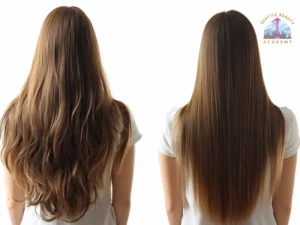
Straight hair often makes haircut lines and inconsistencies more visible.
Techniques such as:
- Blunt cutting
- Graduation
- Precision layering
- Point cutting
- Slide cutting
can be used depending on the desired shape.
Because straight hair tends to show the perimeter clearly, precision and section control are especially important.
Wavy Hair
Wavy hair sits between straight and curly textures and can benefit from techniques that preserve natural movement.
Strategic layering and face framing can enhance the wave pattern, while excessive texturizing may sometimes disrupt the natural shape.
A stylist should consider how the hair behaves both naturally and when styled.
How Do You Choose the Right Hair Cutting Technique?
Professional haircutting is not about choosing one technique and applying it to every client. The stylist needs to evaluate the client’s individual characteristics and desired result.
Before beginning a haircut, consider:
1. Hair Texture
Is the hair straight, wavy, curly, or tightly textured?
Texture affects how the haircut will fall and how much weight should be removed.
2. Hair Density
Is the hair fine, medium, or thick?
Density determines how much hair is present and can influence whether the stylist needs to preserve or remove weight.
3. Desired Shape
Does the client want a blunt, layered, graduated, soft, or highly textured haircut?
The desired silhouette should guide the selection of cutting techniques.
4. Lifestyle
A haircut should also fit the client’s daily routine.
Someone who wants a low-maintenance style may need a different cutting strategy from someone who enjoys spending time styling their hair every morning.
5. Face Shape and Features
Haircut shape can be customized to complement a client’s facial proportions and features.
Face-framing techniques, layers, and changes in volume can all influence the overall appearance of the haircut.
6. Current Hair Trending
Current haircut trends, such as butterfly cuts, graduated bobs, Italian bobs, and feathered layers, can also influence the cutting technique a stylist chooses. However, the trend should always be adapted to the client’s hair texture, density, face shape, lifestyle, and desired level of maintenance. A professional stylist understands the techniques behind each trending style and customizes the cut rather than simply copying a look.
Haircutting Tools Every Professional Should Understand
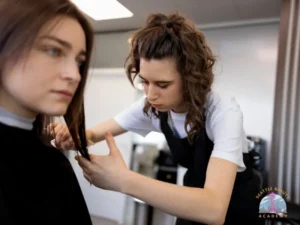
Hair cutting techniques are closely connected to the tools used to execute them.
Common professional haircutting tools include:
- Cutting shears
- Texturizing shears
- Razor
- Hair clips
- Cutting comb
- Wide-tooth comb
- Clippers
- Trimmers
- Spray bottle
- Sectioning tools
Knowing how to use each tool is only part of professional haircutting. A skilled stylist must also understand when and why to use a particular tool.
Why Hair Cutting Technique Matters
A haircut is the foundation of many professional hairstyling services. Even beautiful color or styling work can be difficult to showcase when the underlying shape is poorly constructed.
Strong haircutting skills allow stylists to:
- Create balanced shapes
- Control weight
- Enhance natural texture
- Improve manageability
- Customize styles
- Create consistent results
- Adapt techniques to individual clients
Haircutting also requires more than technical hand skills. Stylists must develop visual analysis, communication, consultation, and problem-solving abilities.
Learning Hair Cutting as Part of Professional Hair Design
Mastering haircutting techniques takes practice. Students and aspiring hairstylists need opportunities to understand cutting theory and then apply those principles through hands-on training.
Hair cutting is also only one component of professional hair design. A complete approach to hair design can involve haircutting, styling, texture, shape, consultation, and other techniques used to create a finished look.
If you want to explore the broader skills and training involved in professional hairstyling, visit our Hair Design program to learn more about the education and practical skills students can develop.
Frequently Asked Questions About Hair Cutting Techniques
What is the most common hair cutting technique?
There is no single technique used for every haircut. Blunt cutting, layering, point cutting, graduation, and texturizing are among the techniques commonly used by professional hairstylists.
What is the difference between blunt cutting and point cutting?
Blunt cutting creates a stronger, more defined line, while point cutting uses the tips of the scissors to soften the ends and create a less rigid finish.
What haircutting technique is best for thick hair?
Thick hair may benefit from techniques that strategically reduce weight and control bulk, such as layering, slide cutting, and controlled texturizing. The appropriate approach depends on the client’s desired shape and hair texture.
What haircutting technique is best for fine hair?
Fine hair often benefits from preserving weight. Blunt lines and carefully controlled layering can help create the appearance of fuller hair, while excessive texturizing may reduce the visual density of the ends.
Why is elevation important in haircutting?
Elevation affects how much weight is retained in different areas of a haircut. Lower elevation generally preserves more weight, while higher elevation can create more layering and movement.
Can one haircut use multiple techniques?
Yes. Professional hairstylists frequently combine several techniques to achieve the desired shape. A haircut may use blunt cutting for the perimeter, elevation for layering, and point cutting for softer ends.
Final Thoughts
Understanding hair cutting techniques is fundamental to creating professional, customized hairstyles. From blunt cutting and graduation to layering, point cutting, razor cutting, and texturizing, each technique gives hairstylists a different way to control length, weight, texture, movement, and shape.
The most effective haircut is not necessarily the one that uses the most techniques. It is the one that uses the right techniques for the client’s hair, lifestyle, and desired result.
For aspiring hairstylists, developing these skills through structured education and hands-on practice can provide an important foundation for a career in professional hair design.
Ready to learn more about professional hair design? Explore Seattle Beauty Academy’s Hair Design program to discover how haircutting and other hairstyling skills can become part of your professional training.