


Choosing a beauty school is an important investment in your future career. Whether you want to become a cosmetologist, hairstylist, esthetician, barber, or nail professional, understanding the total cost of training can help you make a confident decision.
The Tuition Costs and Fees in Beauty Schools can vary considerably across the United States. The advertised tuition price is only one part of the total expense. Students may also need to budget for registration fees, textbooks, professional kits, supplies, uniforms, licensing exams, and other school or state requirements.
For students considering beauty schools in Washington, these costs can also vary depending on the program, location, and number of required training hours. Washington has specific licensing requirements, making it especially important to understand what is included in the price of a program before enrolling.
What Is the Average Cost of Beauty School?
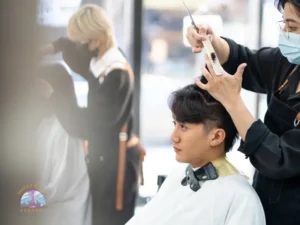
There is no single nationwide tuition price for beauty school. Programs differ by specialty, length, school type, location, facilities, curriculum, and the materials included in tuition.
As a general planning estimate, students may encounter beauty and cosmetology programs costing roughly $10,000 to $25,000 or more for a complete program, although some programs may fall below or above this range. Shorter programs, such as certain nail or esthetics programs, can cost less than comprehensive cosmetology programs, while premium private schools in major metropolitan areas may charge considerably more.
When comparing Tuition Costs in Beauty Schools, it is important to compare the entire cost of completing the program rather than looking only at the advertised tuition.
For example, two schools could advertise similar tuition prices but have very different total costs. One may include textbooks, a professional student kit, uniforms, and certain fees, while another may charge separately for each item.
The U.S. Department of Education recommends looking beyond the sticker price and considering net cost, graduation outcomes, student debt, and post-enrollment earnings when comparing career schools.
What Does Beauty School Tuition Usually Cover?
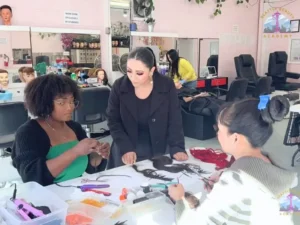
Tuition generally pays for the educational component of your program. Depending on the school and course, it may cover classroom instruction, practical training, instructor supervision, access to school facilities, and preparation for professional licensing.
A cosmetology program, for example, commonly combines theory with hands-on training. Students may learn hair cutting and styling, hair coloring, skin care, nail services, sanitation, safety, and other professional skills.
However, students should never assume that every expense is included in tuition.
When reviewing Tuition Costs and Fees in Beauty Schools and Training, ask the admissions team for a written breakdown of all expected costs before signing an enrollment agreement.
Common costs may include:
- Tuition for the instructional program
- Enrollment or registration fees
- Student kit and professional tools
- Textbooks and workbooks
- Uniforms or required clothing
- Technology or online learning fees
- Application fees
- Supplies used during practical training
- State licensing or examination costs
- Graduation or administrative fees
- Transportation and living expenses
The distinction between tuition and additional expenses is particularly important when comparing programs. A school with a higher advertised tuition price may actually have a lower total cost if more materials and services are included.
Understanding Fees in Beauty Schools
Fees in Beauty Schools can be one of the most confusing parts of planning for beauty education because schools use different fee structures.
Some fees are charged when you enroll, while others may be due during the program or near graduation. A school may also have fees associated with student services, supplies, technology, testing, or administrative processes.
Before enrolling, ask for a complete cost sheet and look for answers to questions such as:
- Is the student kit included?
- Are textbooks included?
- Are uniforms included?
- Are replacement tools or supplies extra?
- Are application or registration fees refundable?
- Are licensing examination fees included?
- Are state licensing fees included?
- Are there additional graduation or administrative fees?
- What happens if the program takes longer than expected?
These questions can help you calculate the realistic cost of your education instead of relying on tuition alone.
Fees in Cosmetology Schools: What Can Add to Your Budget?

Among the different beauty education options, cosmetology programs often require substantial training hours and a broad range of equipment and supplies.
Fees in cosmetology schools may include student kits containing items such as shears, brushes, combs, styling tools, mannequins, chemical-service supplies, and other professional equipment. The exact contents depend on the program.
Some schools bundle these materials into the tuition price, while others list them as separate costs. The difference can make it difficult to compare programs based only on tuition.
For this reason, prospective students should calculate a total program cost:
Tuition + required fees + books + kit and supplies + licensing costs = estimated education cost
You should also consider indirect expenses such as transportation, childcare, food, and lost working hours. These costs are not necessarily charged by the school, but they can affect your overall education budget.
Tuition Costs in Beauty Schools Washington Students Should Know
Students researching Tuition Costs in Beauty Schools Washington programs will find that prices vary significantly across the state.
For example, Washington Career Bridge currently lists individual cosmetology programs with different tuition and supply costs. One 1,600-hour program in Federal Way lists $16,000 in tuition, $100 in required fees, and $1,500 for books and supplies. Another Washington cosmetology program in Seattle lists $13,920 in tuition, $150 in required fees, and approximately $3,809 for books and supplies. A Tacoma program with 1,800 hours lists $20,000 in tuition, $200 in required fees, and $2,900 for books and supplies.
These examples demonstrate why students should not treat one school’s price as the standard for the entire state. Program length, curriculum, school structure, location, and included materials can all affect the final cost.
Tuition Costs in Beauty Schools Washington: Why Training Hours Matter

Washington has specific education requirements for beauty professionals. According to the Washington State Department of Licensing, students pursuing a cosmetologist license through an approved beauty school must complete at least 1,600 hours of training. Other licenses have different requirements: barbering requires 1,000 hours, manicuring 600 hours, esthetics 750 hours, master esthetics 450 hours, and hair design 1,400 hours.
That means students comparing Tuition Costs in Beauty Schools Washington should consider the cost per training hour as well as the total tuition.
A beauty program with a higher total price may provide more training hours or include more equipment and resources. Conversely, a lower-priced program may have additional costs that are not obvious from the initial tuition quote.
Fees in Beauty Schools Washington: Licensing and Exams
Another important part of the budget is the cost associated with becoming licensed after completing training.
In Washington, cosmetologists and other regulated beauty professionals must meet state licensing requirements. Graduates of approved programs generally must complete the required education and pass the applicable state-approved examinations before applying for their license.
The Washington State Department of Licensing also announced that Prov became the state’s new cosmetology testing vendor on May 1, 2026. Students should therefore verify current examination requirements and fees directly with the Washington DOL before budgeting for their final licensing steps.
This is an important consideration when reviewing Fees in Beauty Schools Washington. A school’s tuition may prepare you for the licensing process without necessarily covering every fee charged by the state or testing provider.
How to Compare Beauty School Costs

The cheapest program is not automatically the best value, and the most expensive school is not necessarily the best choice either.
Instead, compare schools based on total cost and educational value.
Start by requesting a detailed cost breakdown from every school you are considering. Then compare:
- Total tuition: What is the full price of the program?
- Required fees: Which enrollment, administrative, or technology fees are separate?
- Student kit: What tools and products are included?
- Books and supplies: Are these included or purchased separately?
- Training hours: How many hours are required?
- Program length: How long does it typically take to graduate?
- Licensing preparation: Does the curriculum prepare students for required exams?
- Financial aid: Are grants, scholarships, payment plans, or other assistance available?
- Completion outcomes: What percentage of students complete the program?
- Career outcomes: What information is available about graduates’ employment and earnings?
The Federal Student Aid program recommends considering cost alongside graduation rates, debt, and post-enrollment earnings when evaluating career schools.
Can Financial Aid Help Pay for Beauty School?
Depending on the institution and the student’s eligibility, financial assistance may reduce the amount paid out of pocket.
Potential sources can include scholarships, grants, school-specific assistance, payment plans, and federal student aid for eligible institutions and students.
Completing the FAFSA can be an important first step for students seeking federal financial aid. Federal Student Aid explains that FAFSA information can be used to determine eligibility for federal grants, work-study, and federal student loans, while states and schools may also use the information when determining their own aid.
However, students should confirm that the specific beauty school and program they are considering participate in the applicable aid programs. It is also important to understand the difference between grants and loans: grants generally do not need to be repaid, while loans must be repaid according to their terms.
Questions to Ask Before Enrolling

Before committing to a beauty school, ask for a complete written estimate of your expected expenses.
You can ask:
- What is the total tuition?
- What fees are mandatory?
- What does tuition include?
- How much does the student kit cost?
- Are books and supplies included?
- Will I need to purchase additional supplies?
- Are licensing exam and application fees separate?
- What financial aid options are available?
- Are payment plans available?
- What happens if I need additional training hours?
- What are the school’s graduation and career outcomes?
Getting clear answers can prevent unexpected expenses and make it easier to compare schools fairly.
Understanding the Real Cost of Beauty School
The Tuition Costs and Fees in Beauty Schools should be evaluated as part of the complete investment in your professional education.
For students across America, costs can vary substantially depending on the beauty specialty, school, location, program length, and included materials. Washington students should pay particular attention to state-required training hours and licensing requirements when calculating their total budget.
Most importantly, don’t choose a school based solely on the lowest tuition number. Look at what you receive for that price, what additional costs you will incur, and whether the training supports your professional goals.
A well-planned budget should include tuition, required fees, supplies, licensing expenses, and personal costs. Once you understand the full financial picture, you can compare programs more confidently and choose a beauty education path that fits both your career ambitions and your budget.