


The first thing new students in Manicure Program ask on day one is which nail tools they really need. They usually arrive with a bag full of gadgets, and half of them are either unnecessary or easy to misuse.
You don’t need a big kit to get salon-quality results. You need a handful of good tools, and you need to know how to use them safely. Here is the starter kit ( basic nail tools) we recommend, plus what changes if you want to work as a licensed nail technician.
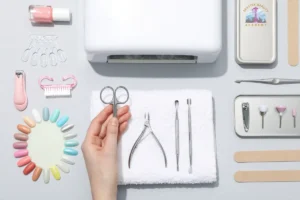
The Basic Manicure Kit
1. Fingernail clippers. Use these for trimming the free edge. Keep a separate, larger pair of toenail clippers for thicker toenails. When trimming toenails, cut straight across to help prevent ingrown nails.
2. Double-sided nail file. A file shapes and smooths the edge after trimming. Choose one with a coarser side for shaping and a finer side for smoothing. For natural nails, a finer grit (around 180 to 240) is gentler. File in one direction rather than sawing back and forth, which can split the nail.
3. Cuticle pusher. A metal pusher or a wooden orange stick gently moves back the soft, softened cuticle. Always soften the skin first, for example after handwashing or a short soak, because pushing on dry skin can tear it.
4. Cuticle nippers. These are for trimming only loose, dead tissue and hangnails. Never cut living skin. Cuts near the nail are a common way infections start. Beginners should use nippers sparingly.
5. Buffer block. A buffer smooths ridges and adds a light shine. Go gently and don’t buff often. Over-buffing thins the nail plate and makes nails weak and sensitive.
6. Polish remover and cotton pads. Acetone-free remover is gentler on natural nails and skin, but it won’t dissolve gel polish. Gel needs a different removal process, which we teach in class.
7. Cuticle oil. Oil keeps the skin around the nail soft and helps prevent dryness and peeling.
8. Hand and foot cream. Finish your routine with cream to hydrate the skin.
Don’t forget the finishing touches: a base coat, a top coat, and your polish color. Lint-free wipes, a small bowl for soaking, a nail brush, and a clean towel round out the kit.
A quick note on cuticles: The true cuticle is the thin layer of dead tissue stuck to the surface of the nail plate. The skin fold around it, the eponychium, is living skin and should never be cut. Knowing the difference is one of the first things we teach.
Budget tip: A basic starter kit typically runs $10–$30 if you buy a pre-made set, or you can build one piece by piece for about the same price. Buy fewer, better tools — stainless steel holds up better to cleaning than cheap alternatives.
Approximate individual tool costs:
- Nail clippers (fingers + toes): $3–$8
- Double-sided nail file: $2–$6
- Cuticle pusher: $2–$6
- Cuticle nippers: $4–$10
- Buffer block: $2–$6
- Cotton pads (pack): $2–$4
- Acetone-free polish remover: $3–$7
- Cuticle oil: $5–$12
- Hand/foot cream: $5–$15
Pre-made basic sets (clippers, file, pusher, buffer, and often nippers in one kit) run $6–$15 for drugstore brands like Revlon or Equate, and $20–$30 for name brands like Tweezerman. Search more nail kit price here
Level Up: Professional Kits and Pedicure Sets
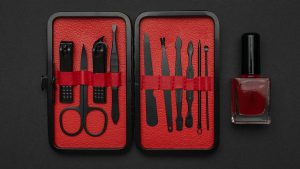
If you are learning Professional Nail Tech Program, you probably upgrade to a professional-grade manicure kit. These sets typically have sharper, longer-lasting stainless steel tools and extras like ingrown-nail clippers, under-nail cleaners, and a wider range of file grits.
If you also care for feet, a manicure and pedicure set adds a foot file or pumice stone, sturdier toenail clippers, and toe separators for polishing without smudges.
A professional-grade kit with higher-quality stainless steel and extra tools (ingrown-nail clippers, under-nail cleaners, multiple file grits) typically runs $30–$80, and curated kits that bundle in polish, base/top coat, and treatments can run $100+.
Tool Hygiene: Home vs. Salon
Clean tools protect your health, and this is where home care and professional practice differ.
At home (for your own use only):
- Wash reusable metal tools with soap and water after each use.
- Wipe them with rubbing alcohol (70% or higher) and let them dry completely before storing.
- Never share tools. Replace files and buffers when they wear out or get dirty.
As a licensed professional in Washington:
- Tools must be cleaned first, then disinfected with an approved disinfectant, not just wiped with alcohol.
- Porous items such as nail files, buffers, and wooden orange sticks can’t be properly disinfected. They are single-use and must be thrown away or given to the client.
- Follow the current Washington State Department of Licensing rules for sanitation and disinfection. [Read more here]
We teach these standards from the first day of class, so they become habit long before you take the state exam.
Learn the Tool Names in Three Languages
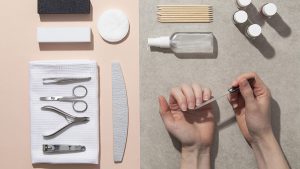
Knowing the right terms helps you study, communicate with clients, and pass your exam. Here’s a quick glossary:
| English | Español | Tiếng Việt |
|---|---|---|
| Nail clippers | Cortaúñas | Bấm móng tay |
| Nail file | Lima de uñas | Dũa móng |
| Cuticle pusher | Empujador de cutículas | Cây đẩy da |
| Cuticle nippers | Cortacutículas / alicate | Kềm cắt da |
| Buffer block | Bloque pulidor | Khối đánh bóng móng |
| Cotton pads | Almohadillas de algodón | Bông gòn / bông tẩy |
| Acetone-free remover | Removedor sin acetona | Nước rửa móng không acetone |
| Cuticle oil | Aceite para cutículas | Dầu dưỡng da móng |
| Hand cream | Crema de manos | Kem dưỡng da tay |
| Base coat / Top coat | Base / Capa final | Sơn lót / Sơn bóng |
At Seattle Beauty Academy, students learn with instructors who speak Spanish and Vietnamese. Marisol, a graduate from El Salvador, studied with translated tool and product names and one-on-one support from her instructor. She passed her Washington nail technician exam and now serves clients in both languages. [Read Marisol’s story ]
Thinking About Doing This as a Career?
If you love nail care and want to turn it into a profession, Washington State requires a license to work as a nail technician. Our Manicure Training program prepares you for it, with hands-on practice, live client experience, and small classes.