


Walk into any nail salon in Seattle, WA and it looks clean. Fresh towels, organized stations, pleasant lighting. But the tools that touch your nails, the water in the foot bath, the file that just finished someone else’s service — these are where sanitation either holds up or falls apart.
For clients, knowing what to look for can protect you from infections, bacterial exposure, and skin damage. For nail techs, nail salon sanitation standards in Washington State aren’t just best practice — they’re the law. And the gap between knowing the rules and consistently applying them is where most professional mistakes happen.
This is what both sides of the nail table need to understand.
Why we have to follow Nail Salon Sanitation Standards in Washington State:
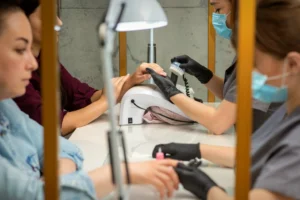
Nail services involve direct contact with skin, cuticles, and sometimes open or compromised tissue. That makes them a higher-risk personal care service than most people realize.
The most common infections associated with nail services include:
- Bacterial infections — often caused by cuts or nicks during cuticle work combined with unsterilized tools
- Fungal nail infections (onychomycosis) — spread through shared files, buffers, or contaminated foot baths
- Staph infections — linked to improperly cleaned equipment or reused single-use items
- Warts and viral infections — transmitted through skin-to-skin contact or contaminated surfaces
None of these are inevitable. All of them are preventable — with proper sanitation protocols applied consistently, every single appointment.
The key word is consistently. A salon that sanitizes correctly most of the time is not a safe salon.
What Washington State Requires from Licensed Nail Techs
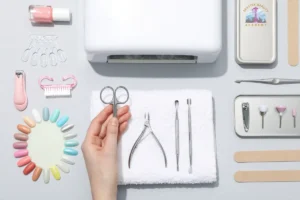
Washington State’s Department of Licensing sets specific sanitation standards for all licensed cosmetology professionals, including nail technicians. These aren’t suggestions — they’re requirements that licensed techs must follow to maintain their license and protect their clients.
Here’s what the law requires:
- Tool disinfection: All non-disposable implements — nippers, pushers, metal files, drill bits — must be cleaned and then fully immersed in an EPA-registered disinfectant for the time specified on the product label. Wiping a tool with alcohol does not meet this standard.
- Single-use items: Files, buffers, orangewood sticks, and any porous implement that touches a client must be discarded after one use or given to the client to take home. They cannot be reused on another person — ever.
- Foot baths and basins: After each client, foot baths must be drained, cleaned with soap, sprayed with an EPA-registered disinfectant, and allowed to sit for the required contact time before being rinsed and used again. Jet foot baths require additional weekly deep-cleaning procedures.
- Hand hygiene: Techs must wash hands with soap and water before and after every service. Gloves are recommended for services involving chemicals or broken skin.
- Surface disinfection: Nail tables, armrests, and all surfaces that contact clients must be disinfected between every appointment — not just wiped down.
- Product containers: Polishes, gels, and creams must be dispensed in a way that prevents contamination. Double-dipping (putting an applicator back into a shared product after it has touched a client) is a sanitation violation.
These standards are part of the curriculum in Washington State’s 600-hour nail technician training program. Every licensed nail tech in the state has been tested on this knowledge — which is why a nail tech who doesn’t follow these protocols isn’t just being careless. They’re operating below their professional standard.
What Clients Should Look For — A Practical Checklist
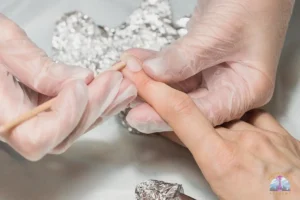
You don’t need to interrogate your nail tech at every appointment. But there are observable signals that tell you whether a salon takes sanitation seriously.
✅ Green flags — signs of a safe salon:
- Tools arrive in sealed pouches or are visibly removed from a disinfectant solution at the start of your service
- Single-use files and buffers are opened fresh for you — or you’re told to bring your own
- The tech washes their hands before touching you
- The nail table is wiped down between clients — you can see this happen if you arrive a little early
- Foot baths are drained and cleaned in front of you, not just refilled
- The salon smells clean without being overwhelmingly chemical — proper ventilation is part of a safe environment
🚩 Red flags — signs to take seriously:
- The same file is used on multiple clients without being replaced
- Tools are pulled from a drawer or jar without any visible disinfection process
- The tech skips hand washing or goes straight from one client to you
- Foot bath jets are running but the basin was never visibly cleaned
- Cuticles are being cut aggressively — licensed techs are trained to push, not cut living tissue
- Products are being applied by double-dipping the same brush back into shared containers
If you see red flags, it’s always appropriate to ask questions. A professional nail tech will welcome the conversation. If a tech or salon becomes defensive about basic sanitation questions, that’s information worth having.
The Dip Powder Problem Nobody Talks About
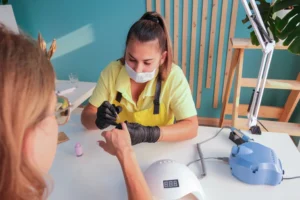
Dip powder systems deserve a specific mention because sanitation violations are common and the risk is frequently underestimated.
The traditional “dip” method — where the client’s fingers are literally dipped into a shared jar of powder — is a direct cross-contamination risk. Skin cells, bacteria, and oils from one client’s nails enter the communal product and remain there for every client after.
Professional application of dip powder means the powder is poured or brushed onto the nail, never shared through direct dipping. If you see a jar being passed between clients, that’s not a preference — it’s a hygiene violation.
Ask your tech how they apply dip powder before the service begins. The answer will tell you a great deal about how they approach sanitation overall.
Chemical Safety — What Nail Techs Need to Protect Themselves
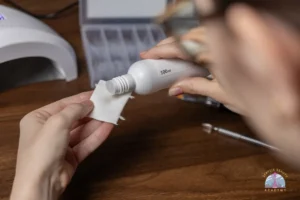
Sanitation in nail services isn’t only about protecting clients. Nail techs work with chemical products every day — acrylic monomer, gel products, acetone, disinfectants — and long-term exposure without proper precautions is a genuine occupational health concern.
- Ventilation: Working in a space with poor airflow concentrates fumes from acrylics and disinfectants. Proper ventilation — either through salon-wide systems or personal ventilation units at the nail table — is essential.
- Gloves: Repeated skin contact with acrylic monomer and acetone degrades the skin barrier over time. Nitrile gloves (not latex, which degrades with acetone) protect against this.
- Masks: An N95 or higher-rated mask filters nail dust effectively during e-file services. Standard surgical masks do not.
- Eye protection: During e-file services and chemical applications, debris and splatter are real risks. Safety glasses are not excessive — they’re appropriate.
Washington State’s nail tech training curriculum covers chemical safety alongside sanitation — because the long-term health of the professional matters as much as the safety of the client at any individual appointment.
Why Training Is the Foundation of All of This
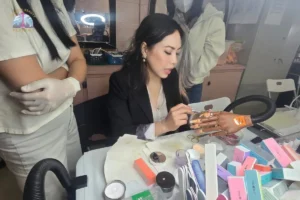
A nail tech who corners on sanitation isn’t usually doing so maliciously. More often, they were either undertrained, not held to a consistent standard during their education, or working in an environment where shortcuts became normalized.
This is why the quality of nail tech training matters — not just for the licensing exam, but for every client that tech will serve over the course of their career. Schools that treat sanitation and safety as a core subject, not a checkbox, produce professionals who carry those standards with them into every salon they work in.
For clients choosing a nail tech, asking where someone trained and what their program covered isn’t an unusual question. It’s a reasonable one. The best nail techs will have a clear and confident answer — because their training gave them one.
Understanding how beauty education connects to community health in Seattle goes beyond individual appointments. Every trained, safety-conscious nail tech is a direct investment in the health of the clients and communities they serve.
A Note for Nail Tech Students
If you’re currently in training, sanitation is the one area where there is no “good enough.” A technique you can improve with practice. A sanitation habit that slips becomes a risk to every client you touch.
Build the habit of full protocol — every tool, every surface, every client — from your very first practice session. By the time you’re licensed and working, it should feel as automatic as applying a base coat.
Your clients will trust you with their health before they trust you with their nails. That trust is worth protecting.
Seattle Beauty Academy’s Nail Technology program covers sanitation standards, chemical safety, and Washington State licensing requirements across 600 hands-on training hours. Programs are available in English, Spanish, and Vietnamese. Learn more at seattlebeautyacademy.com