

I remember the first morning I walked into Seattle Beauty Academy.
I had my notebook in my hand, a dictionary app open on my phone, and a knot in my stomach the size of a fist. My English was not strong. I understood some words, but when people spoke fast — the way Americans do — everything blurred together and I would just nod and hope I hadn’t missed something important.
I was 34 years old. I had left El Salvador two years before, following my husband to Seattle, leaving behind my mother, my sisters, my friends — everything familiar. I had worked in a salon back home, doing simple manicures for neighbors and family.
It wasn’t a business. It was just something I knew how to do with my hands.
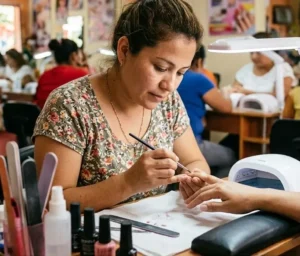
In Seattle, I wanted to make it real. I wanted a license. I wanted a career. I wanted to stand on my own.
What I didn’t know was how hard it would be to learn a trade in a language that wasn’t mine.
“I Almost Didn’t Enroll”
Before I found Seattle Beauty Academy, I visited two other schools. Both were fine — clean, professional. But when I asked if there was anyone who spoke Spanish, the answer was no. One front desk person tried to help me with Google Translate on her phone, but I could see she was uncomfortable, and I felt like a problem to be managed.
I almost gave up on the idea of school altogether. Maybe I would just do informal work — nails in people’s homes, cash only, no license.
I didn’t even know how long it takes to become a nail tech in Washington State, or whether someone like me could realistically do it.
” Many immigrant women I knew were doing this. It was survival, not a career.
Then a friend told me about Seattle Beauty Academy. She said there was a Spanish-speaking instructor there. I didn’t fully believe her until I called.
The woman who answered — she spoke to me in Spanish. Clear, warm, patient Spanish. I almost cried on the phone.
Meeting Ms. Yazmin Martinez
My instructor was Ms. Yazmin Martinez, and from the first day, she changed everything.
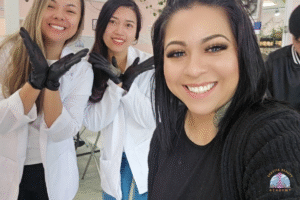
Ms. Martinez didn’t just translate words for me. She translated the whole experience. When we learned about manicure tools, she taught me the names in English and in Spanish, side by side, so I could build the vocabulary I needed for the Washington State licensing exam.
When I didn’t understand a technique, she would sit with me after class — not because she had to, but because she wanted to see me succeed.
She would say: “Marisol, your hands already know this. We’re just teaching your mind the words.”
She was right. I had been doing nails for years. My hands knew the pressure, the angle, the rhythm. What I was learning at Seattle Beauty Academy was the professional language — the terminology, the safety standards, the anatomy — that would allow me to work legally and confidently in the United States.
Seattle Beauty Academy’s approach to bilingual nail tech training in Washington is what made this possible — a program built not just for fluent English speakers, but for people who are building their lives here.
With Ms. Martinez’s guidance, every tool and product in the classroom had a label in both English and Spanish. The curriculum was delivered in English, but I never felt alone inside it. When I had questions, I asked in Spanish.
When I needed to practice explaining a service to a client in English, Ms. Martinez would role-play with me until I felt ready.
The Hardest Part Was Not the Nails
People assume that the technical part is the biggest challenge for someone like me. It wasn’t.
The hardest part was believing I deserved to be there.
There were days I looked around at younger students — American students who laughed easily, who raised their hands without hesitation, who didn’t have to think twice before speaking — and I felt invisible. Like I had taken a wrong turn somewhere. Like maybe this career was for someone else, someone who fit in more naturally.
On one of those days, Ms. Martinez pulled me aside after class.
“You’re one of the most technically careful students I’ve had,” she told me. “Don’t let the language make you think you’re less than anyone in this room.”
I held onto that for a long time.
The Day I Passed My Exam

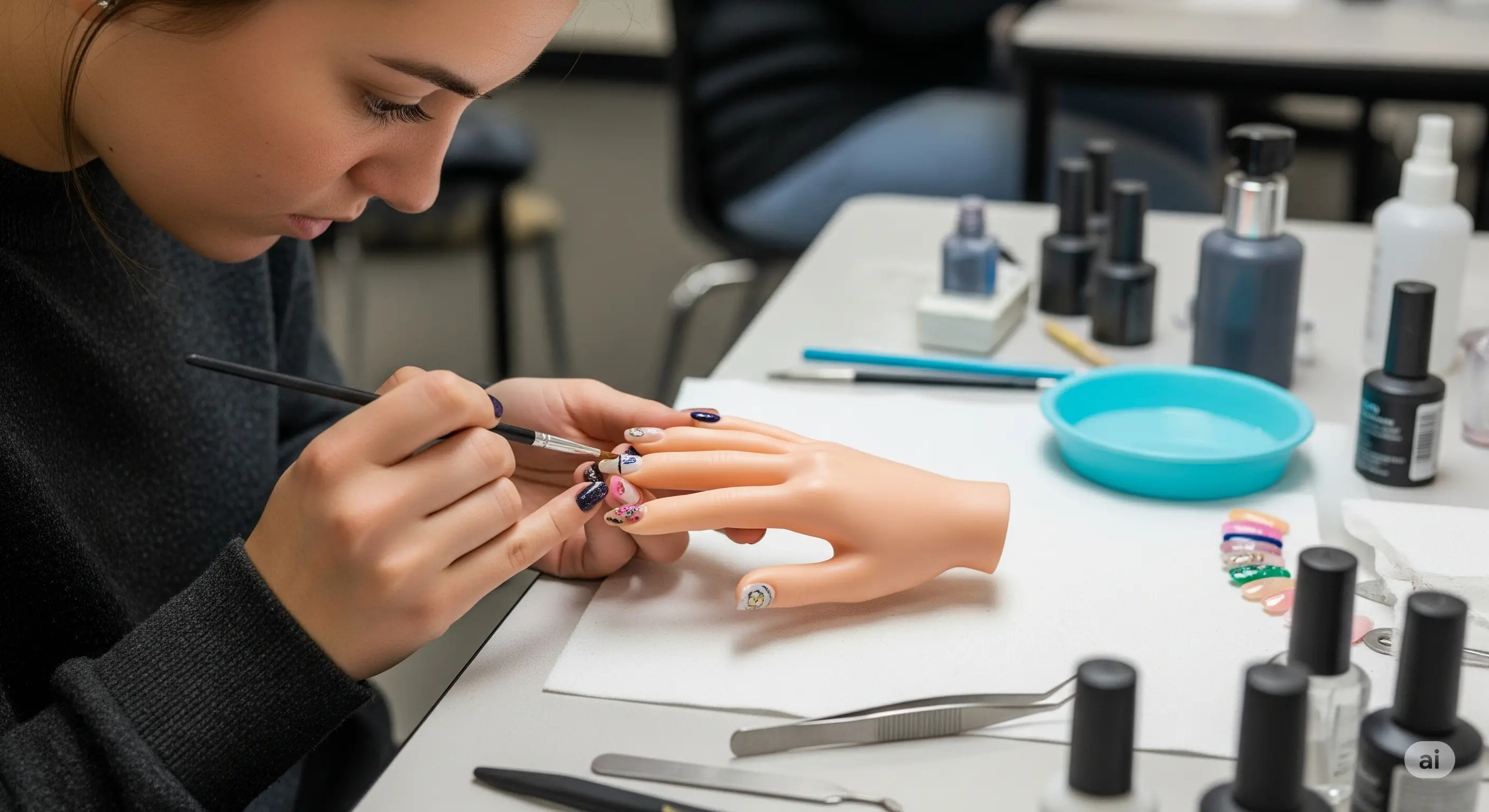
The Washington State nail technician license exam has two parts: a written test and a practical demonstration.”. For months, I studied the written portion in both English and Spanish, using the translated materials Ms. Martinez helped me prepare.
I practiced the practical portion on classmates, on mannequin hands, on anyone who would sit still long enough.
The morning of my exam, I was the first person in the parkinglot.
I passed both parts on my first attempt.
When I called Ms. Martinez to tell her, I was crying so hard she could barely understand me. She was laughing and crying too.
“I knew,” she kept saying. “I always knew.”
Where I Am Now
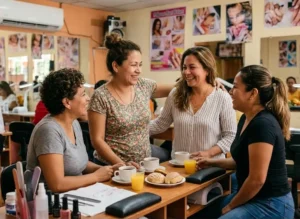
Today, I work at a multicultural salon in Seattle. My clients come from everywhere — Mexico, Vietnam, Ethiopia, the Philippines, and of course, the United States.
I serve them in Spanish and in English, and sometimes in the small phrases I’ve picked up from Vietnamese coworkers who have become my friends.
My specialty is natural nail care and gel manicures. I am building a clientele. For anyone exploring what a nail tech career looks like day-to-day, NAILS Magazine’s career resources offer a honest, industry-level perspective. I have regulars now — women who ask for me by name, who trust my hands with theirs.
Some of them are immigrants too. Some of them are nervous about something. A new job, a first date, a hard week. And when I do their nails, I try to be what Ms. Martinez was to me: patient, careful, present.
A professional who makes you feel like you belong.
If You’re Reading This and You’re Afraid
Maybe you’re in a situation like mine. Maybe you came to Seattle from another country, and you have a skill in your hands but you don’t know how to make it official. Maybe the language feels like a wall.
I want to tell you: the wall has a door.
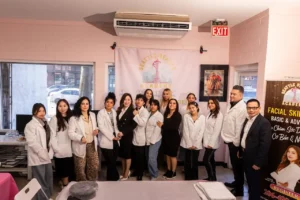
Seattle Beauty Academy offers nail technology programs with instruction available in Spanish and Vietnamese. Small class sizes mean you’re never lost in a crowd. Live client practice means you graduate with real experience, not just a certificate.
You don’t have to have perfect English to build a career in beauty. You just have to be willing to start.
I was 34 when I started. I was scared. I barely spoke the language.
And now I am a licensed nail technician in the state of Washington, doing work I love, in a city that has become my home.
Your hands already know this. Seattle Beauty Academy will teach them the rest.
Take the First Step
Seattle Beauty Academy is enrolling now for its Nail Technology program, with bilingual support available for Spanish and Vietnamese-speaking students.
Book a free school tour today. We’d love to speak with you in your language.
Seattle Beauty Academy has been preparing students for Washington State licensure for over decade. With programs in Cosmetology, Esthetics, Nail Technology, and Instructor Training, we’re committed to accessible, career-focused beauty education for every student — regardless of background or language.