


Body contouring is a cosmetic approach designed to reshape specific areas of the body, improve body proportions, and address concerns such as localized fat deposits, loose skin, and the appearance of cellulite. With advances in aesthetic technology, people can now explore different body contouring treatments, including non-surgical procedures that use radio-frequency, ultrasound, cooling, or light-based energy.
But what exactly is body contouring, how does it work, and what are the differences between the available treatments?
Whether you are researching aesthetic treatments or interested in learning more about body contouring technologies, understanding the fundamentals can help you make informed decisions. This guide explores common body contouring methods, their applications, benefits, and limitations.
What Is Body Contouring?
Body contouring, also known as body sculpting, refers to cosmetic procedures and treatments designed to change the shape or appearance of specific areas of the body.
Depending on the technique, body contouring may aim to:
- Reduce the appearance of small, localized fat deposits.
- Improve the appearance of loose or less-firm skin.
- Enhance muscle tone and definition.
- Reduce the visible appearance of cellulite.
- Create smoother body contours and more balanced proportions.
Body contouring is not a single treatment. It includes a range of surgical and non-surgical approaches that work through different mechanisms.
For example, some treatments use controlled cooling to target fat cells, while others use heat-based energy to affect underlying tissue or improve skin firmness. Surgical procedures, such as liposuction and tummy tucks, involve different techniques and levels of intervention.
The appropriate approach depends on the individual’s aesthetic goals, health considerations, treatment area, and the technology being used.
How Does Body Contouring Work?
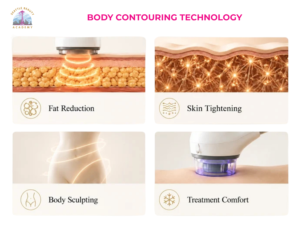
Body contouring treatments work by targeting different structures beneath or within the skin. These may include subcutaneous fat, connective tissue, skin, and muscles.
The mechanism depends on the treatment technology.
Some non-invasive devices use controlled temperatures or energy to affect fat cells. Others focus on stimulating collagen, improving skin appearance, or temporarily reducing the visibility of cellulite.
Here are the main approaches:
1. Fat reduction
Certain technologies use controlled cooling, heat, or ultrasound energy to target localized fat deposits. The intended result is a gradual reduction in the volume of fat in the treated area.
2. Skin tightening
Some radiofrequency and light-based treatments deliver energy that heats tissue and may stimulate collagen production. This can improve the appearance of skin firmness over time.
3. Muscle stimulation
Certain electromagnetic devices induce repeated muscle contractions. These treatments are designed to improve muscle tone and definition in specific areas.
4. Cellulite appearance improvement
Some mechanical, massage-based, and energy-based treatments aim to temporarily improve the appearance of cellulite by affecting connective tissue, circulation, or fluid distribution.
It is important to understand that these treatments do not all produce the same results. Non-invasive body contouring is generally intended for localized cosmetic concerns rather than significant weight reduction or the treatment of obesity.
Types of Body Contouring Treatments

Different body contouring technologies are designed to address different aesthetic concerns. Understanding how each method works helps explain why treatment selection and professional assessment are important.
1. Radiofrequency (RF) Body Contouring
Radiofrequency body contouring uses electrical energy to generate controlled heat within targeted tissue.
Depending on the device and its intended use, radiofrequency treatments may aim to:
- Improve the appearance of skin firmness.
- Stimulate collagen remodeling.
- Reduce the appearance of cellulite.
- Improve the appearance or circumference of certain treated areas.
RF energy is used in several aesthetic applications, including skin tightening and certain fat-reduction procedures.
The treatment mechanism and depth of energy delivery vary between devices. Some technologies deliver energy through external applicators, while others use specialized treatment tips.
What to know: Radiofrequency is not a universal solution for every body contouring concern. Device specifications, treatment protocols, contraindications, and professional qualifications must be considered before treatment.
2. Ultrasound Body Contouring
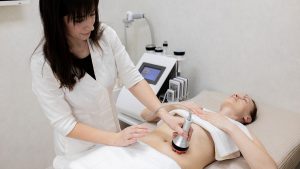
Ultrasound body contouring uses sound-wave energy to target tissue beneath the skin.
Certain therapeutic ultrasound devices are designed to deliver energy into the subcutaneous fat layer. Depending on the technology, the energy may cause thermal or mechanical effects that can contribute to localized fat reduction.
Ultrasound-based treatments may be used to address areas such as:
- The abdomen.
- The thighs.
- The flanks.
- Other areas with localized fat deposits, depending on device authorization.
Some ultrasound technologies are also used in skin-focused aesthetic treatments.
What to know: Ultrasound devices differ in their energy delivery, intended uses, and safety requirements. Proper skin contact, treatment settings, and device-specific protocols are essential. Incorrect application may cause burns or tissue injury.
3. Cryolipolysis (Fat Freezing)
Cryolipolysis is a non-invasive fat-reduction technique that uses controlled cooling to target localized fat deposits.
Fat cells are more sensitive to cold temperatures than many surrounding tissues. During treatment, a specialized applicator delivers controlled cooling to a selected area.
The targeted fat cells are gradually processed and eliminated by the body’s natural mechanisms over the following weeks and months.
Cryolipolysis is commonly associated with the term fat freezing and is designed for localized fat bulges rather than overall weight loss.
Potential treatment areas include:
- Abdomen.
- Flanks.
- Thighs.
- Under the chin, when an appropriate device is authorized for that area.
What to know: Cryolipolysis is not suitable for everyone. Certain cold-related medical conditions can make this treatment inappropriate. A rare but serious complication called paradoxical adipose hyperplasia can also occur, in which the treated fatty tissue increases rather than decreases in size.
Professional assessment and device-specific safety screening are important before considering this procedure.

4. Laser-Based Body Contouring
Laser-based body contouring uses controlled light energy to heat targeted tissue.
Certain laser technologies are designed to affect fat cells in localized areas, while other light-based systems may focus on improving the appearance of skin or cellulite.
Depending on the device, treatment may involve:
- Targeting localized fat deposits.
- Improving the appearance of body contours.
- Supporting changes in skin firmness.
Laser-based treatments are not all interchangeable. Different devices have different wavelengths, energy levels, treatment indications, and safety requirements.
What to know: Protective eyewear, appropriate device settings, and assessment of skin characteristics are essential when using light-based technologies. Some treatments may not be appropriate for individuals with certain photosensitivity conditions or medications.
5. Vacuum Therapy and Mechanical Body Treatments
Vacuum-based and mechanical body treatments use suction, massage, or controlled vibration to manipulate the skin and underlying soft tissue.
These approaches may be used in aesthetic settings to:
- Temporarily improve the appearance of cellulite.
- Support massage-based body treatments.
- Improve the appearance of uneven skin texture.
- Provide a temporary smoother appearance in treated areas.
Unlike certain energy-based fat-reduction procedures, mechanical treatments generally focus on the appearance of the skin and soft tissue rather than permanently removing fat cells.
What to know: Results may be temporary, and treatment suitability depends on the device, technique, and individual circumstances.
Non-Surgical vs. Surgical Body Contouring
One of the most important distinctions in body contouring is the difference between surgical and non-surgical procedures.
Although both approaches aim to change body shape, they involve different techniques, recovery considerations, and treatment outcomes.
| Comparison | Non-surgical body contouring | Surgical body contouring |
|---|---|---|
| Approach | External devices or non-surgical techniques | Surgical procedures |
| Incisions | Generally none | Usually required |
| Main purpose | Address selected localized cosmetic concerns | Remove fat, excess skin, or reshape tissue |
| Recovery | Often shorter, depending on treatment | Usually requires more recovery time |
| Results | May be gradual, modest, or temporary | Can produce more substantial structural changes |
| Examples | RF, cryolipolysis, certain ultrasound treatments | Liposuction, tummy tuck, body lift |
Common Surgical Body Contouring Procedures
1.Liposuction
Liposuction is a surgical procedure that removes localized fat deposits using a specialized suction device. It is commonly performed on areas such as the abdomen, thighs, hips, arms, and flanks.
2.Tummy Tuck (Abdominoplasty)
A tummy tuck is a surgical procedure that removes excess abdominal skin and may involve tightening abdominal muscles. It is often considered by individuals with significant loose skin around the abdomen.
3.Body Lift
A body lift is a surgical procedure designed to remove excess skin and reshape specific areas of the body. It may be considered following significant weight loss.
Surgical procedures require evaluation by appropriately qualified medical professionals. They involve different risks and recovery requirements from non-surgical aesthetic treatments.
Body Contouring vs. Weight Loss: What’s the Difference?
Body contouring and weight loss are related to body appearance, but they serve different purposes.
Weight loss generally refers to reducing overall body weight through changes in body fat, muscle mass, or fluid levels. It may result from nutrition, physical activity, medical treatment, or surgery.
Body contouring, on the other hand, focuses on changing the appearance or shape of specific body areas.
For example, someone may reach a stable body weight through a balanced lifestyle but still have localized fat deposits or loose skin that affect their desired body proportions.
Body contouring treatments may address selected cosmetic concerns, but they are not substitutes for weight management, regular physical activity, or medical care.
The U.S. Food and Drug Administration (FDA) emphasizes that non-invasive body contouring does not treat obesity or provide the health benefits associated with weight loss.
Benefits and Limitations of Body Contouring

Body contouring offers different options for people interested in addressing specific aesthetic concerns. However, understanding both its potential benefits and limitations is essential.
1.Potential Benefits
1. Targeted treatment areas
Certain body contouring technologies are designed to address localized areas rather than produce overall weight reduction.
2. Different treatment options
The availability of cooling, heating, ultrasound, light-based, and mechanical technologies allows qualified professionals to consider different approaches based on treatment goals.
3. Non-surgical alternatives
Some technologies provide non-surgical options for individuals who do not want or are not suitable for certain surgical procedures.
4. Individualized treatment planning
Body contouring treatments can be selected according to the treatment area, skin condition, aesthetic goals, and device-specific indications.
2.Limitations to Consider
1. Results vary
Not everyone responds to body contouring treatments in the same way. Results depend on the technology, treatment area, individual characteristics, and treatment protocol.
2. Multiple sessions may be necessary
Some technologies require several sessions or maintenance treatments to achieve or maintain the intended cosmetic effect.
3. Results may be temporary
Certain treatments provide temporary improvements, particularly those targeting the appearance of cellulite or skin texture.
4. Potential side effects
Depending on the technology, side effects may include redness, swelling, bruising, discomfort, burns, changes in skin pigmentation, or other complications.
5. Not suitable for every individual
Medical history, medications, implanted devices, skin conditions, and other factors can affect treatment suitability.
Anyone considering a body contouring procedure should consult an appropriately qualified healthcare professional and review the risks and benefits of the specific device or procedure.
What Should You Know About Body Contouring Technologies?
As aesthetic treatments continue to develop, understanding body contouring technologies has become increasingly important for professionals working in the beauty and skincare industry.
Each technology has its own mechanism, applications, limitations, and safety requirements. Knowing the difference between radiofrequency, ultrasound, cryolipolysis, laser-based treatments, and mechanical techniques helps professionals understand why different approaches are used for different concerns.
A strong foundation in body contouring education should include:
- Basic body anatomy and an understanding of subcutaneous fat.
- Familiarity with different body contouring technologies.
- Equipment operation and manufacturer-recommended protocols.
- Client consultation and treatment assessment.
- Contraindications and safety precautions.
- Hygiene, sanitation, and appropriate treatment environments.
- Understanding professional scope of practice and applicable regulations.
Technology knowledge alone is not enough. Responsible aesthetic practice also requires an understanding of client suitability, realistic expectations, and when a treatment should be referred to an appropriately qualified healthcare professional.
For those interested in developing their knowledge further, structured education can provide an opportunity to explore body contouring techniques and their professional applications.
Frequently Asked Questions About Body Contouring
1. What is body contouring used for?
Body contouring is used to change the appearance or shape of specific body areas. Depending on the procedure, it may target localized fat deposits, loose skin, muscle definition, or the appearance of cellulite.
2. Does body contouring help with weight loss?
No. Non-invasive body contouring is not a weight-loss treatment. It is designed to address selected cosmetic concerns in specific body areas rather than reduce overall body weight or treat obesity.
3. What are the most common types of non-surgical body contouring?
Common technologies include radiofrequency, ultrasound, cryolipolysis (fat freezing), and certain laser-based treatments. Mechanical massage and vacuum-based technologies may also be used to temporarily improve the appearance of cellulite.
4. Is non-surgical body contouring safe?
Non-surgical body contouring can involve risks, even when no incisions are made. Potential side effects depend on the technology and may include redness, swelling, discomfort, burns, or changes in skin pigmentation. Appropriate professional assessment and authorized device use are important.
5. How long does body contouring take to show results?
The timeline varies by technology. Some treatments produce gradual changes over several weeks or months, while others may provide temporary improvements in skin appearance. The number of sessions and expected results depend on the specific device and individual treatment plan.
6. Is body contouring permanent?
Not necessarily. Some procedures are designed to reduce targeted fat cells, but results can vary and remaining fat cells can still increase in size. Other treatments, particularly those targeting cellulite or skin appearance, may provide temporary improvements.
7. What is the difference between body sculpting and body contouring?
The terms body sculpting and body contouring are often used interchangeably in the aesthetic industry. Both generally refer to treatments or procedures designed to improve the shape, definition, or appearance of specific body areas.
8. Can anyone receive body contouring treatments?
No. Treatment suitability depends on individual health conditions, medications, skin characteristics, implanted devices, and the specific technology being used. A qualified professional should assess each individual before treatment.
Explore Body Contouring Education at Seattle Beauty Academy
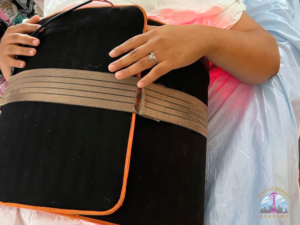
Understanding body contouring involves more than knowing the names of different treatments. It also requires an understanding of body anatomy, aesthetic technologies, equipment safety, and responsible treatment practices.
For individuals interested in learning more about the professional applications of body contouring, Seattle Beauty Academy offers a dedicated Body Contouring Program that introduces students to this area of aesthetic education.
Students interested in exploring the training, course details, and professional learning opportunities can learn more about the program here:
Explore the Body Contouring Program at Seattle Beauty Academy
You can also read our guide to Body Contouring Certification in Seattle: Training, Requirements & Career Opportunitiesto learn more about professional training considerations.
Note: Body contouring education or completion of a private training course does not automatically authorize an individual to perform every body contouring procedure. Professional licensing, device authorization, and scope-of-practice requirements vary by treatment and jurisdiction.