

You spent months — maybe years — learning your craft. You passed your licensing exam. You built a clientele, developed your technique, and found your rhythm behind the chair or the nail table.
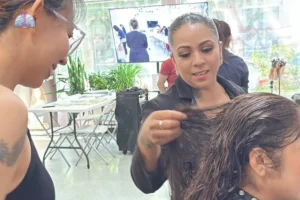
And then one day, a newer technician asks you how you do something, and you explain it so naturally, so clearly, that they look at you and say: “You should be a teacher.”
Maybe you’ve heard that before. Maybe you’ve thought it yourself.
If you’re a licensed beauty professional wondering what comes next, teaching is worth taking seriously — not as a fallback, but as a deliberate career choice with real impact, real stability, and a kind of fulfillment that client work alone rarely provides.
Here’s why.
You Stop Building One Career. You Start Building Many

When you work behind a chair or a nail table, your impact is real — but it’s contained. You transform one client at a time. You build one career: yours.
When you become a beauty instructor, the math changes entirely.
Every student you teach goes on to serve hundreds of clients. Every technique you pass down gets carried into salons across your city, your state, your industry.
The knowledge you share doesn’t stay in one room — it multiplies.
This is what makes teaching one of the most quietly powerful careers in beauty. You’re not just doing the work anymore. You’re expanding what the work can become.
For many instructors, this shift is the most meaningful professional moment of their lives — bigger, even, than passing their own licensing exam.
Teaching Makes You Better at Your Craft

There’s a well-documented principle in education: the best way to truly master something is to teach it.
When you have to explain why a technique works — not just how to do it — you develop a depth of understanding that years of client work alone don’t always build. You start to see your own habits more clearly.
You identify gaps in your knowledge you didn’t know existed. You become more precise, more intentional, more articulate about what you do.
Beauty professionals who move into instruction often say the same thing: “I thought I knew this inside and out. Teaching showed me how much more there was to understand.”
This isn’t a weakness — it’s growth. And it makes you a stronger practitioner even on the days you’re back behind the table.
The Beauty Industry Has a Real Need for Qualified Instructors
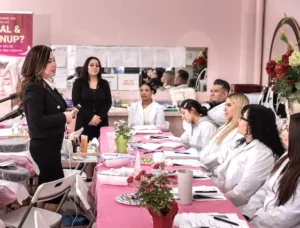
Washington State’s beauty industry is growing. Demand for licensed cosmetologists, estheticians, and nail technicians continues to rise — and that means beauty schools need qualified, experienced instructors to train the next generation.
This is not a saturated field. Good instructors — ones who combine technical excellence with genuine communication skills and patience — are genuinely sought after.
Schools that offer bilingual instruction, like those serving Spanish and Vietnamese-speaking communities in Seattle, face an even sharper need for instructors who can teach across language and cultural barriers.
If you’re a licensed professional with strong technique and a desire to connect with people, the industry needs what you have.
It’s a Career with Room to Grow — and a Community That Needs You
Client-based beauty work is deeply rewarding, but it comes with real pressures — physical demands, income variability, the constant hustle of building and maintaining a clientele.
Many beauty professionals love their craft but find that, after years behind the chair, the sustainability of that model becomes a real question.
Teaching opens a different kind of door. Beyond the day-to-day, a career in beauty education leads to lead instructor roles, curriculum development, school administration, and continuing education consulting.
The career ladder in beauty education is longer and more varied than most people realize.
But here’s what often goes unspoken: Seattle’s beauty schools — especially those serving immigrant and multilingual communities — are actively looking for instructors who reflect the students they serve.
If you came up through a bilingual program, if you know what it feels like to learn a skill in a language that isn’t your first, you carry something no curriculum can teach.
That lived experience makes you an exceptional educator — and a rare one.
You Don’t Have to Leave the Industry to Evolve Within It
One of the most common hesitations beauty professionals have about moving into instruction is the fear of leaving behind the work they love.
The good news: you don’t have to.
Many beauty instructors continue to take clients, maintain their skills, and stay current with trends — while also teaching. The two roles complement each other naturally.
Your current client work keeps your technique sharp and your industry knowledge fresh. Your teaching role deepens your understanding and expands your professional identity.
You’re not trading one career for another. You’re adding a dimension to the one you already have.
What It Actually Takes to Become a Beauty Instructor in Washington State
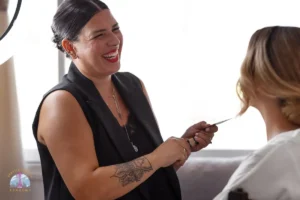
Washington State has a clear, structured path to instructor licensure — including a 500-hour approved training program and a licensing exam. Here’s a complete breakdown of the requirements →
What’s worth knowing here is that the path is achievable — especially for licensed professionals who already have a strong technical foundation.
The instructor training program builds on what you already know, teaching you how to design lessons, manage a classroom, and support learners with different backgrounds and learning styles.
For bilingual professionals — those who speak Spanish, Vietnamese, or another language alongside English — the value you bring to an instructor role is significant and immediate.
Seattle’s beauty schools have a growing and urgent need for instructors who can teach across language and cultural barriers, and that need is not being fully met.
If you speak another language, you’re not just qualified — you’re needed.
A Note on Next Steps
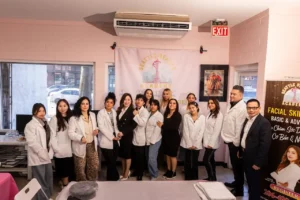
If you’re a recent graduate — or a working professional who’s been in the industry for a while — and you’ve found yourself drawn to the idea of teaching, the most important thing you can do is explore what the path actually looks like for you.
Seattle Beauty Academy offers an Instructor Training program designed for licensed beauty professionals who are ready to take that next step.
It’s a program built on the same values that define everything at SBA: hands-on learning, small class sizes, and genuine investment in every student’s success.
It’s worth a conversation. Not a commitment — just a conversation.
Learn more about the Instructor Training program
The Students You’ll Remember
Ask any beauty school instructor about their career, and they won’t talk about curriculum or classroom management first.
They’ll tell you about a student.
The one who came in terrified and graduated confident. The one who failed their practical exam twice and passed on the third try, crying in the parking lot.
The one who reminded them — on a hard day, in a small moment — exactly why they chose this path.
That’s the part of teaching that nobody fully prepares you for: the students you’ll carry with you long after the class ends.
It’s also the part that makes it one of the most impactful careers the beauty industry has to offer.
Seattle Beauty Academy has been preparing students for Washington State licensure for more than 10 years, with programs in Cosmetology, Esthetics, Master Esthetics, Nail Technology, and Instructor Training. Learn more at seattlebeautyacademy.com