


If you are learning to become a hair designer, understanding how hair grows is more important than simply knowing how to cut, color, or style it. Every service you perform takes place on hair that is constantly changing through its natural growth cycle.
At Seattle Beauty Academy, our instructors teach students to look beyond what they see on the surface. Understanding the biology of hair can help you have better consultations, recognize changes in hair and scalp health, and give clients more informed advice.
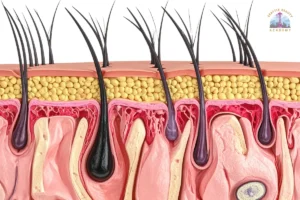
One of the foundations to understand is the hair growth cycle. Hair does not grow continuously at the same rate. Instead, each hair follicle moves through a series of stages: anagen, catagen, telogen, and exogen.
Let’s look at each stage and what our instructors want future hair designers to understand about it.
What Is the Hair Growth Cycle?
The hair growth cycle is the natural process through which individual hair follicles produce hair, transition through different phases, rest, and eventually release the hair strand.
One important thing to remember is that not all of the hair on your head is in the same stage at the same time. Each follicle follows its own cycle.
Seattle Beauty Academy’s licensed beauty instructor – Ms Yazmin’s advice:
“When you’re working with a client, remember that you’re looking at the result of many different biological processes—not just the hair you can see.”
Understanding this concept helps you avoid oversimplifying concerns such as hair growth or shedding. A client’s experience can be influenced by many factors, so professional observation and a good consultation are essential.

1. Anagen: The Active Growth Phase
Anagen is the active growth stage of the hair cycle. During this phase, cells in the hair follicle are actively dividing and producing the hair shaft.
The length of this stage varies from person to person. Genetics play an important role in determining how long an individual’s hair remains in the active growth phase.
The longer a follicle stays in anagen, the longer the hair has the opportunity to grow.
Why Does This Matter to a Hair Designer?
Clients sometimes ask why their hair seems to grow slowly or why they have difficulty reaching a certain length. Understanding anagen gives you some biological context for these questions.
Hair length is not determined only by how quickly hair grows from the scalp. You also have to consider how long the hair remains in the growth phase and whether the existing hair can retain its length without excessive breakage.
Seattle Beauty Academy’s licensed beauty instructor – Mr Patrick’s advice:
“Don’t promise a client that a product or service can dramatically change the natural growth cycle. Instead, focus on what you can control: maintaining the condition of the hair and helping the client retain the length they already grow.”
For a future hair designer, this is an important distinction. Your role is not to diagnose or make medical claims. Your role is to understand the hair, provide appropriate professional care, and communicate realistic expectations.
2. Catagen: The Transition Phase
After the active growth phase, the follicle enters catagen, a short transition period.
During catagen, active hair production slows down and the follicle begins to shrink. The hair is no longer growing in the same way it did during anagen, but the existing strand remains associated with the follicle.
This stage prepares the follicle to move from active growth into its resting phase.
Why Does This Matter to a Hair Designer?
Clients generally won’t be able to identify when an individual strand enters catagen. However, understanding the stage gives you a more complete picture of how hair behaves.
As a professional, you should understand that hair growth isn’t a constant, uniform process.
Seattle Beauty Academy’s licensed beauty instructor – Ms Mindy’s advice:
“Learn the biology even when you can’t see it. A strong hair designer understands what is happening underneath the surface, not just how the finished hairstyle looks.”
This is one reason foundational theory matters alongside hands-on practice in beauty education.
3. Telogen: The Resting Phase
Telogen is commonly described as the resting phase of the hair cycle.
During this stage, the follicle is temporarily inactive. The existing hair remains in place while the follicle prepares for a new cycle.
This stage is especially relevant when talking with clients about shedding.
Not every hair that falls out indicates a problem. Hair naturally reaches the end of its cycle, and shedding is part of the process that allows follicles to eventually begin producing new hair.
Seattle Beauty Academy’s licensed beauty instructor – Mr Patrick’s advice:
“Don’t immediately tell a client that shedding means something is wrong. Listen first, observe what you can professionally observe, and understand when a concern should be referred to a healthcare professional.”
A hair designer can discuss general hair-care practices and recognize visible changes, but diagnosing medical causes of hair loss is outside the scope of a typical salon professional.
If a client reports sudden, excessive, persistent, or unusual hair loss, encourage them to seek appropriate medical advice.
4. Exogen: The Shedding Phase
Exogen refers to the stage associated with the shedding or release of individual hairs.
As older hairs are released, the follicle can eventually begin another growth cycle. The process then returns to anagen, where a new hair begins growing.
Some educational sources include exogen as part of the telogen phase rather than treating it as a separate stage. The terminology can therefore vary depending on the educational source.
For a hair designer, the key concept is simple: shedding is a natural part of the hair cycle.
Seattle Beauty Academy’s licensed beauty instructor – Ms Mindy’s advice:
“When a client is concerned about shedding, don’t focus only on the number of hairs they see. Ask questions about what has changed, how long they’ve noticed it, and whether there are other concerns.”
A thoughtful consultation is much more useful than jumping to conclusions.
What Can Affect the Hair Growth Cycle?
Hair growth is influenced by more than the growth cycle itself. A person’s genetics, age, hormones, overall health, nutrition, stress, and certain medications can influence hair growth and shedding.
This is an important area where hair designers need to understand their professional boundaries.
You may notice that a client’s hair or scalp appears different from what you have seen previously. You may also hear a client describe changes in shedding or growth.
However, noticing a change is different from diagnosing its cause.
Seattle Beauty Academy’s licensed beauty instructor – Ms Yazmin’s advice:
“Know what you can observe, know what you can advise on, and know when to refer.”
This is an important professional habit for students to develop. Your education gives you the knowledge to work with hair safely and professionally, but medical diagnosis belongs to qualified healthcare professionals.
Hair Growth vs. Hair Length Retention
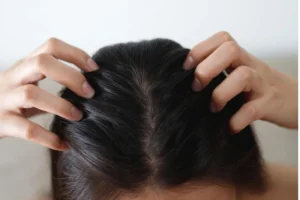
One of the most useful concepts for a new hair designer to understand is that hair growth and length retention are not the same thing.
Hair can be growing normally from the scalp while the client struggles to gain visible length.
Why?
Because the ends of the hair may be breaking at a similar rate to the rate at which new hair is growing.
For example, a client may say:
“My hair never grows.”
But the actual issue may be that the hair is growing from the scalp while repeated breakage prevents the client from retaining that new length.
This is where your understanding of hair health becomes important.
Seattle Beauty Academy’s licensed beauty instructor – Mr Patrick’s advice:
“When a client wants longer hair, don’t look only at the scalp. Look at the entire strand and consider whether the hair is strong enough to retain length.”
Heat styling, chemical processing, mechanical stress, and other forms of damage can contribute to breakage. A good hair designer considers both growth at the follicle and condition along the hair shaft.
This concept will become particularly important when you learn how to evaluate hair before chemical and thermal services.
How Hair Growth Knowledge Helps During a Client Consultation
A professional consultation is about more than asking a client what haircut they want.
You also need to understand their expectations and listen carefully to their concerns.
For example, a client might say:
- “My hair isn’t growing.”
- “I’m losing more hair than before.”
- “My hair used to be thicker.”
- “I can’t seem to grow my hair past this length.”
Understanding the hair growth cycle gives you a foundation for discussing these concerns responsibly.
You can explain the difference between growth and length retention, ask about the client’s hair-care routine and service history, and observe the condition of the hair and scalp.
Seattle Beauty Academy’s licensed beauty instructor – Ms Mindy’s advice:
“Good consultations start with listening. Don’t assume you know what the client’s problem is before you ask questions.”
This is a skill that develops with education and practice. As you progress through your training, you’ll learn to combine your hair theoretical knowledge with hands-on observation.

Why Hair Growth Knowledge Matters for Future Hair Designers
Learning the hair growth cycle may seem like basic theory, but it supports many of the decisions you’ll make as a professional.
It helps you:
- Explain hair growth more realistically to clients
- Understand normal shedding
- Recognize the difference between growth and length retention
- Approach consultations more thoughtfully
- Understand the importance of hair and scalp health
- Recognize situations that may require professional referral
- Make better-informed decisions about hair services
At Seattle Beauty Academy, our approach to hair design education is built around connecting foundational knowledge with practical skills. Understanding the science behind hair gives students a stronger foundation for the hands-on techniques they develop throughout their education.
Final Thoughts From Our Instructors
Hair grows in a cycle—not at a constant, predictable rate. The anagen, catagen, telogen, and exogen stages each play a role in the life of an individual hair.
For an aspiring hair designer, learning these stages is about more than memorizing four terms. It’s about understanding what your client’s hair is experiencing beneath the surface and using that knowledge to communicate responsibly.
Our instructors encourage students to develop the habit of asking three questions when working with hair:
What am I seeing? Why might it matter? And what is appropriate for me to do as a hair professional?
That mindset can help you move from simply performing hair services to becoming a more knowledgeable and thoughtful hair designer.
Learn Hair Science at Seattle Beauty Academy
Understanding hair biology is one part of developing the knowledge and practical skills needed for a career in the beauty industry. At Seattle Beauty Academy, students can build their foundation through professional beauty education that combines classroom knowledge with hands-on learning.
Whether you’re beginning your journey or developing your existing skills, understanding the science behind the services you perform can help you become a more confident and informed beauty professional.