


The skincare industry continues to evolve as advanced technologies introduce new ways to address common skin concerns. From laser hair reduction and skin resurfacing to pigmentation treatments and light-based skin rejuvenation, laser technology has become an important part of modern esthetics.
For aspiring estheticians and skincare professionals, understanding how these technologies work is increasingly valuable. Knowing the differences between laser devices, their applications, and their safety considerations helps professionals develop a stronger foundation in advanced skincare education.
But what exactly is laser technology? How do different types of esthetic lasers work, and how does Intense Pulsed Light (IPL) compare?
This guide explores the science behind laser technology, the different devices used in modern esthetics, their applications, and the importance of professional education.
1. Understanding Laser Technology in Modern Esthetics
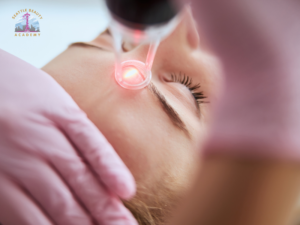
- What Is Laser Technology?
LASER stands for Light Amplification by Stimulated Emission of Radiation. It is a technology that produces a concentrated beam of light with specific optical characteristics, including a particular wavelength.
Unlike ordinary light, which contains multiple wavelengths and spreads in different directions, laser light is highly concentrated and can be directed toward specific targets.
In esthetics and dermatology, different laser wavelengths interact with different structures in the skin. These structures, known as chromophores, absorb light energy and convert it into heat.
The three primary chromophores targeted in many esthetic laser procedures are:
- Melanin: The pigment responsible for skin and hair color. It is a target in certain pigmentation and hair reduction treatments.
- Hemoglobin: A protein in red blood cells that absorbs certain wavelengths, making it a target in treatments for selected vascular concerns.
- Water: A major component of skin tissue that absorbs energy from certain lasers, particularly those used for skin resurfacing.
The effectiveness of a laser treatment depends on the wavelength, energy level, pulse duration, skin characteristics, and the intended treatment target.
2. How Does Laser Treatment Work?
Many esthetic laser procedures use a principle called selective photothermolysis.
This process involves delivering light energy at a wavelength that is preferentially absorbed by a specific target in the skin. The absorbed energy generates heat, which affects the targeted structure while aiming to minimize damage to surrounding tissue.
For example:
- During laser hair reduction, melanin in the hair follicle absorbs light energy.
- During certain vascular treatments, hemoglobin absorbs the laser energy.
- During laser resurfacing, water within the skin absorbs energy, allowing controlled removal or heating of targeted tissue.
The choice of laser and treatment settings depends on the intended application and individual skin characteristics.
2. Different Types of Laser Technologies Used in Esthetics
Not all lasers perform the same function. Each laser technology has specific characteristics, wavelengths, and applications.
Understanding these differences is essential when studying advanced esthetic devices.
- Alexandrite Laser
Alexandrite lasers commonly operate at a wavelength of 755 nanometers. Their energy is strongly absorbed by melanin, making them particularly useful for hair reduction in appropriately selected individuals.
Common applications include:
- Laser hair reduction.
- Treatment of selected pigmented lesions.
- Certain pigmentation-related procedures.
Because melanin is present in both hair and skin, careful assessment is necessary before treatment. Higher melanin levels in the surrounding skin can increase the risk of unwanted pigmentation changes or burns.
2. Diode Laser
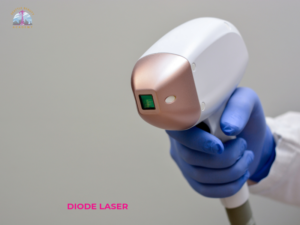
Diode lasers commonly operate at wavelengths around 800–810 nanometers, although other wavelengths are also available.
They are widely used for laser hair reduction because their wavelength allows energy to reach the hair follicle while targeting melanin.
Common applications include:
- Hair reduction on different body areas.
- Treatment of unwanted facial and body hair.
- Hair reduction using devices designed for different skin phototypes.
The appropriate wavelength, energy settings, and cooling system depend on the device and the individual’s skin and hair characteristics.
3. Nd Laser
The Neodymium-doped Yttrium Aluminum Garnet (Nd) laser is commonly used in esthetic and dermatological procedures.
The long-pulsed Nd laser typically operates at 1064 nanometers. Its longer wavelength penetrates deeper into the skin and is less strongly absorbed by epidermal melanin than shorter-wavelength hair reduction lasers.
Common applications include:
- Hair reduction, particularly for appropriately selected darker skin phototypes.
- Selected vascular treatments.
- Certain pigmented lesion treatments.
- Some skin rejuvenation procedures.
Different pulse durations and device settings can produce different treatment effects. Nd lasers should therefore be selected according to the intended application rather than treated as a one-size-fits-all solution.
4. Ruby Laser
Ruby lasers typically operate at 694 nanometers and were among the earlier laser technologies developed for dermatological applications.
They are strongly absorbed by melanin and have been used for:
- Selected pigmented lesions.
- Certain tattoo removal applications.
- Hair reduction in appropriately selected skin and hair combinations.
Ruby lasers have a more limited role in many contemporary esthetic practices compared with newer technologies, particularly when treating individuals with higher levels of epidermal melanin.
5. CO2 Laser
Carbon dioxide (CO2) lasers commonly operate at a wavelength of 10,600 nanometers.
Because water strongly absorbs this wavelength, CO2 lasers can precisely remove targeted skin tissue.
They are primarily associated with ablative skin resurfacing.
Common applications include:
- Treatment of certain acne scars.
- Reduction of selected wrinkles and fine lines.
- Improvement of skin texture.
- Treatment of certain scars and other skin irregularities.
CO2 resurfacing can produce significant changes in skin texture, but it also involves recovery time and potential complications. Treatment intensity and technique influence the results and healing process.
6. Er Laser
The Erbium (Er) laser operates at approximately 2,940 nanometers and is also strongly absorbed by water.
It is used for controlled skin resurfacing and removal of targeted skin layers.
Common applications include:
- Superficial and deeper skin resurfacing.
- Improvement of selected acne scars.
- Treatment of fine lines.
- Reduction of certain textural irregularities.
Compared with traditional CO2 resurfacing, Er lasers generally produce less residual thermal damage, although the actual treatment effect depends on the device and settings.
7. Pulsed Dye Laser (PDL)
Pulsed Dye Lasers typically operate around 585–595 nanometers.
They primarily target hemoglobin, making them useful for treating selected vascular conditions.
Applications include:
- Facial redness.
- Spider veins and small visible blood vessels.
- Certain vascular birthmarks.
- Selected inflammatory skin conditions.
PDL treatments demonstrate how laser technology can target specific structures rather than treating the entire skin surface indiscriminately.
8. Q-Switched and Picosecond Lasers
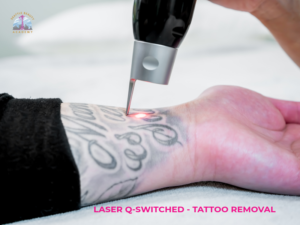
Q-switched and picosecond lasers are designed to deliver energy in extremely short pulses.
Their rapid energy delivery can help break down pigment particles into smaller fragments, which the body can gradually clear through its natural processes.
Common applications include:
- Tattoo removal.
- Selected pigmentation concerns.
- Certain benign pigmented lesions.
Q-switched lasers deliver energy in nanosecond pulses, while picosecond lasers operate in even shorter picosecond pulses.
The choice depends on the pigment being targeted, the device, and the individual’s skin characteristics.
9. Fractional Laser Technology
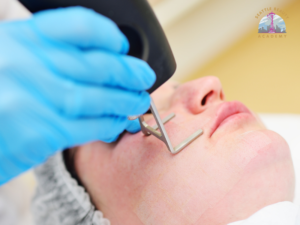
Fractional technology is a treatment approach rather than one specific laser type.
Instead of treating the entire skin surface uniformly, fractional devices deliver energy into microscopic treatment zones, leaving surrounding tissue untreated.
This approach can support the skin’s healing process while targeting selected areas.
Fractional technology can be incorporated into different laser platforms, including:
- Fractional CO2 lasers.
- Fractional Er lasers.
- Non-ablative fractional lasers.
Common applications include acne scars, uneven skin texture, fine lines, and selected signs of photoaging.
3. What Skin Concerns Can Laser Treatments Address?
Different laser technologies are designed to address different skin concerns. Understanding the relationship between the target and the technology helps explain why one device cannot effectively treat every condition.
| Skin concern | Common laser technologies |
|---|---|
| Unwanted hair | Alexandrite, diode, Nd |
| Selected pigmentation | Q-switched, picosecond, alexandrite |
| Acne scars | Fractional CO2, Er, non-ablative fractional |
| Fine lines and wrinkles | CO2, Er, fractional lasers |
| Visible redness and vascular lesions | Pulsed Dye Laser, selected Nd |
| Tattoo removal | Q-switched and picosecond |
| Skin texture irregularities | Fractional CO2, Er, non-ablative fractional |
Treatment suitability depends on the specific condition, skin phototype, device, and professional assessment. For example, not every type of pigmentation is appropriate for laser treatment, and certain conditions, such as melasma, may require particular caution.
4. Ablative vs. Non-Ablative Laser Treatments
One important distinction in esthetic laser technology is whether a device is ablative or non-ablative.
1. What Are Ablative Lasers?
Ablative lasers remove controlled portions of the skin’s surface by using energy absorbed by water within the tissue.
Examples include:
- CO2 lasers.
- Er lasers.
These procedures are commonly used for more intensive skin resurfacing, particularly when addressing certain scars, wrinkles, and textural irregularities.
Because the treatment removes tissue, recovery generally involves more downtime and careful aftercare.
2. What Are Non-Ablative Lasers:
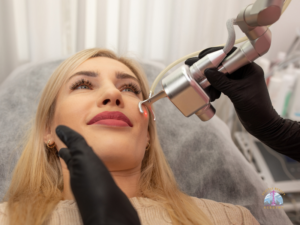
Non-ablative lasers heat targeted structures within the skin without intentionally removing the outer skin surface.
They can stimulate changes in the dermis and support collagen remodeling, depending on the wavelength and treatment protocol.
Common applications include:
- Improving selected signs of photoaging.
- Addressing certain acne scars.
- Supporting skin texture improvement.
- Promoting collagen remodeling.
Non-ablative treatments generally involve less surface disruption, although multiple sessions may be needed and side effects are still possible.
3. What Is the Difference Between Fractional and Full-Field Treatments?
Fractional treatments deliver energy to microscopic treatment zones while leaving surrounding areas untreated.
Full-field treatments address a broader, continuous area of tissue.
Fractional approaches can be either ablative or non-ablative. The distinction is important because fractional technology describes the treatment pattern, not necessarily the intensity or type of laser.
5. What Is IPL (Intense Pulsed Light) Technology?
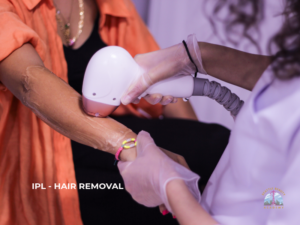
IPL stands for Intense Pulsed Light. Although it is often discussed alongside laser treatments, IPL is not technically a laser.
While laser devices emit light at a specific wavelength or narrow wavelength range, IPL devices produce broad-spectrum, non-coherent light.
Filters can be used to select wavelength ranges for particular treatment applications.
- How Does IPL Work?
IPL delivers controlled pulses of light to targeted structures within the skin.
Depending on the device and settings, the light energy can be absorbed by melanin or hemoglobin. This energy is converted into heat, creating a targeted effect.
IPL is commonly used for:
- Reducing the appearance of selected sun-induced pigmentation.
- Treating certain forms of facial redness.
- Reducing unwanted hair.
- Photo-rejuvenation treatments.
- Addressing selected superficial vascular concerns.
IPL treatments are sometimes marketed as photofacials because they can address multiple visible signs of sun damage and uneven skin tone.
However, IPL is not suitable for every skin condition or skin type. Certain pigment disorders, including melasma, may worsen with inappropriate light-based treatment.
2. What Are the Benefits and Limitations of IPL?
One characteristic of IPL is its ability to deliver different wavelength ranges through the same device platform.
Potential advantages include:
- Versatility across selected esthetic applications.
- Treatment of certain pigmentation and vascular concerns.
- Applications for hair reduction and photo-rejuvenation.
- Adjustable treatment parameters and filters.
However, IPL also has limitations. Its broad-spectrum light is less wavelength-specific than laser energy, and treatment effectiveness depends heavily on appropriate filters, settings, skin assessment, and operator expertise.
6. Laser vs. IPL: What Are the Main Differences?
Although both technologies use light energy, laser and IPL devices work differently.
| Comparison | Laser | IPL |
|---|---|---|
| Light source | Specific wavelength or narrow wavelength range | Broad-spectrum pulsed light |
| Light characteristics | Coherent, concentrated light | Non-coherent light |
| Targeting | Wavelength-specific targeting | Filter-selected wavelength ranges |
| Applications | Hair reduction, resurfacing, pigmentation, vascular treatments and more | Hair reduction, selected pigmentation, redness and photo-rejuvenation |
| Device types | Alexandrite, diode, Nd, CO2 and others | Different IPL platforms with interchangeable filters and settings |
- Which Is Better: Laser or IPL?
Neither technology is universally better.
The appropriate choice depends on the treatment objective, skin phototype, target structure, device specifications, and professional assessment.
For example, a specific laser may be selected for a particular hair reduction application, while IPL may be suitable for treating certain combinations of pigmentation and vascular concerns.
Understanding these differences is important for anyone studying modern esthetic technologies.
7. Laser and IPL Safety: Indications, Contraindications and Precautions
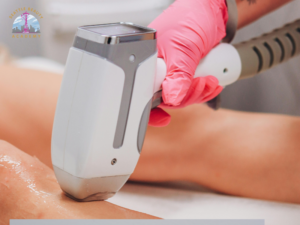
Advanced esthetic technologies require more than knowing how to operate a device. Professionals must also understand when a treatment may be appropriate, when it should be avoided, and when further medical evaluation is necessary.
1. Understanding Skin Phototypes
The Fitzpatrick Skin Phototype Scale classifies skin according to its response to ultraviolet exposure, particularly its tendency to burn or tan.
It ranges from Type I (very fair skin that burns easily) to Type VI (deeply pigmented skin that rarely burns).
Skin phototype is one factor in selecting appropriate laser and IPL treatment parameters.
Because melanin absorbs light energy, individuals with higher levels of epidermal melanin may face a greater risk of unwanted heating, burns, and post-inflammatory hyperpigmentation with certain devices and settings.
However, darker skin is not automatically unsuitable for laser treatment. Some wavelengths, such as 1064 nm Nd, can be appropriate for selected applications when used with suitable protocols and expertise.
2. Common Contraindications and Risk Factors
Before a treatment, a qualified professional should assess the client’s skin condition, medical history, medications, and other relevant factors.
Potential contraindications or reasons to postpone treatment may include:
- Active skin infections or inflammation in the treatment area.
- Open wounds or compromised skin barriers.
- Recent tanning or significant sun exposure.
- Certain photosensitizing medications.
- Certain skin conditions or pigment disorders.
- A history of abnormal scarring or other relevant complications.
- Pregnancy, depending on the procedure and applicable clinical guidance.
The suitability of treatment varies by device and procedure. A contraindication for one treatment does not necessarily apply to every laser or IPL procedure.
3. Potential Side Effects
Possible adverse effects include:
- Temporary redness and swelling.
- Skin sensitivity or discomfort.
- Blistering and burns.
- Hyperpigmentation or hypopigmentation.
- Scarring.
- Eye injury if appropriate protection is not used.
Proper device selection, protective eyewear, treatment protocols, and professional supervision are essential to reducing these risks.
8. The Importance of Professional Education in Advanced Esthetics

As esthetic technologies continue to develop, skincare professionals need a strong understanding of skin anatomy, device characteristics, treatment indications, contraindications, and safety procedures.
Learning about laser and IPL technology is not simply about memorizing device names. It involves understanding how different wavelengths interact with skin structures, why treatment parameters matter, and how to recognize situations that require additional assessment.
Professional education helps build this foundation through subjects such as:
- Skin anatomy and physiology.
- Understanding different skin types and conditions.
- Laser and light-based technology principles.
- Treatment indications and contraindications.
- Client consultation and assessment.
- Pretreatment and post-treatment procedures.
- Safety practices and professional responsibilities.
In Washington State, Master Esthetics education includes advanced instruction in laser, light, radiofrequency, ultrasound, and plasma practices, alongside other advanced skincare subjects.
9. Explore Advanced Esthetics Education at Seattle Beauty Academy
Understanding laser and IPL technologies is one part of developing knowledge in modern advanced esthetics.
At Seattle Beauty Academy, the Master Esthetics Program builds on foundational esthetics education and introduces students to advanced skincare technologies and professional treatment principles.
The curriculum covers:
- Laser and IPL technology: Understanding their applications, indications, contraindications, and use.
- Radiofrequency (RF): Learning about radiofrequency technology and its role in advanced skincare.
- Ultrasound and plasma technology: Exploring additional energy-based technologies used in esthetic practices.
- Advanced skincare techniques: Developing knowledge of skin restoration, anti-aging, acne treatment, and skin texture improvement.
- Professional consultation: Learning to assess individual skin needs and develop personalized treatment approaches.
Students also study the importance of appropriate client assessment, treatment planning, and safety considerations across different skin types and conditions.
Interested in expanding your knowledge of advanced skincare technologies? Explore the Master Esthetics Program at Seattle Beauty Academy to learn more about the curriculum and educational pathway.
——————————————————————————————————————————————————————————————–
Educational disclaimer: This article provides general information about laser and IPL technologies and is not a substitute for medical advice, diagnosis, or professional training. Treatment decisions and device use must follow applicable licensing requirements, manufacturer instructions, and relevant medical supervision rules.